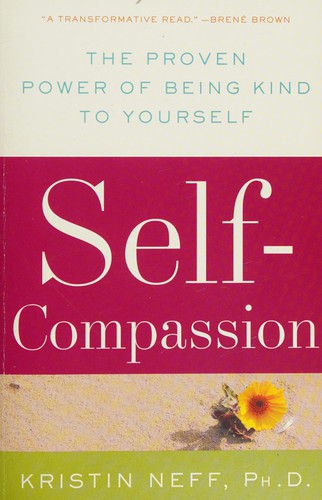
Talk to Self-Compassion: The Proven Power of Being Kind to Yourself like its author wrote you back.
Get the ideas that fit your life — not generic summaries.
- Chat with the book
- Audiobook-style main ideas
- Adapts to your life and goals
- Helps you take action
Self-Compassion: The Proven Power of Being Kind to Yourself, in detail
Kristin Neff makes a claim that many readers initially resist: treating yourself with the same kindness you'd offer a good friend in distress is not self-indulgence, weakness, or an obstacle to high performance. It is, according to her research, one of the most reliable predictors of psychological health, motivation, and resilience. Self-compassion is not the same as self-esteem, which depends on external validation and comparative evaluation. It is a stable inner orientation that doesn't require you to be special, right, or better than others in order to feel okay about yourself.
Neff defines self-compassion through three interlocking components. Self-kindness means treating yourself with warmth rather than harsh judgment when you fail or struggle. Common humanity means recognizing that imperfection, difficulty, and suffering are part of the shared human experience rather than signs of personal deficiency. Mindfulness means observing painful thoughts and feelings clearly rather than suppressing them or amplifying them into rumination. The three components interact: mindfulness makes the suffering visible, common humanity prevents isolation, and self-kindness provides the care.
Much of the book is a direct challenge to the cultural assumption that self-criticism is what keeps people motivated and accountable. Neff's research, and a broader body of evidence she draws on, suggests the opposite: harsh self-judgment tends to increase anxiety and avoidance, while self-compassion supports risk-taking, learning from failure, and sustained motivation. The inner critic that seems like a performance-booster is usually a form of fear management that costs more than it delivers.
Neff is careful to address the obvious objections. Won't self-compassion make people lazy? Won't they stop trying? The research says no. Self-compassionate people set goals and work toward them; they're simply less derailed by failure because they don't need to avoid failure to maintain their sense of worth. The book includes exercises derived from mindfulness-based stress reduction and self-compassion training programs, making it more than an argument — it's a manual for a change most readers will find surprisingly difficult to practice.
The big ideas
- 1.
Self-compassion has three components: self-kindness, common humanity, and mindfulness. Each is necessary; none is sufficient alone.
- 2.
Self-compassion is not the same as self-esteem. Self-esteem requires comparison and evaluation; self-compassion is unconditional and doesn't depend on performance or status.
- 3.
The inner critic is usually a fear-management strategy, not a motivational tool. It tends to increase anxiety and avoidance rather than performance.
