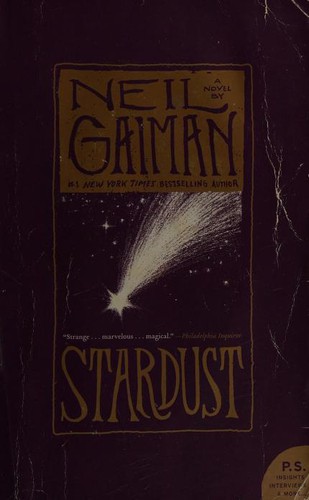
Talk to Stardust like its author wrote you back.
Get the ideas that fit your life — not generic summaries.
- Chat with the book
- Audiobook-style main ideas
- Adapts to your life and goals
- Helps you take action
What it argues
Stardust begins with a simple bargain: young Tristran Thorn promises a girl he fancies that he will bring her a fallen star, and to find it he must cross the wall at the edge of his English village into Faerie. What he finds on the other side is not a rock but a young woman named Yvaine, and the journey home turns out to be very different from the journey out. Gaiman is working in the mode of nineteenth-century fairy tale — Dunsany, MacDonald, William Morris — but the sensibility is contemporary and his voice is warm rather than cold.
The book is less concerned with plot mechanics than with the texture of a particular kind of magic: the kind that has rules even when it doesn't announce them, the kind that carries a cost even when the bill is deferred. Tristran starts as an earnest, slightly foolish young man who doesn't know who he is, and that ignorance turns out to be structural to the story. Meanwhile Yvaine is stranded in a world she didn't ask to enter, and the antagonists — a witch-queen, feuding princes — pursue their own agendas with an amoral competence that feels genuinely dangerous.
What it gets right
- 1.
The journey changes the traveler in ways the traveler cannot predict before setting out — Tristran arrives at the wall one person and returns another, without the change ever feeling forced.
- 2.
Gaiman's Faerie operates on the logic of old tales: deals bind, true names matter, and innocence is not the same as safety.
- 3.
The novel treats love not as something that happens to people but as something they grow into through ordeal and attention.
What it covers
Who wrote it
Neil Gaiman is a British author whose work spans novels, comics, short fiction, and screenwriting. He is best known for the Sandman comic series, which transformed graphic storytelling in the 1990s, and for novels including American Gods, Neverwhere, Coraline, and The Ocean at the End of the Lane. He has won the Hugo, Nebula, Bram Stoker, and Newbery awards, among others. Stardust, first published in 1997 and 1998 in illustrated installments before appearing as a novel in 1999, draws on his love of Victorian fairy tales and the work of writers like Lord Dunsany and George MacDonald.
