Talk to Startup like its author wrote you back.
Get the ideas that fit your life — not generic summaries.
- Chat with the book
- Audiobook-style main ideas
- Adapts to your life and goals
- Helps you take action
What it argues
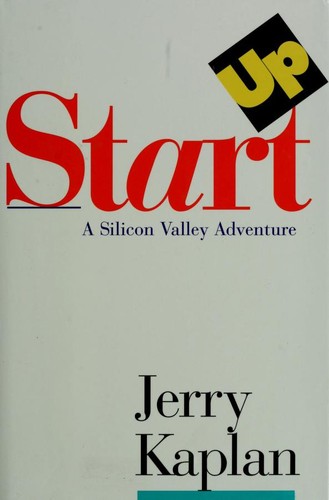
Startup is Jerry Kaplan's account of GO Corporation, the pen-computing company he co-founded in 1987 and ran until it collapsed in 1994. GO raised over $75 million, attracted engineers from Xerox PARC and Apple, and was convinced it had built the future of computing — a tablet-based pen interface that would replace the keyboard-and-mouse paradigm. Microsoft and IBM both tried to kill it. AT&T eventually acquired it, then abandoned it. The book tells that story with unusual candor.
What makes Startup distinctive among tech failure memoirs is Kaplan's willingness to describe the social machinery of Silicon Valley in uncomfortable detail. The fundraising meetings, the board politics, the moment when a venture capitalist signals approval not with words but with a change in body language — Kaplan captures these dynamics with a novelist's eye for texture. The reader sees how deals actually get made, how loyalty shifts when the cap table changes, and how a company can be technically ahead of its time and still fail for reasons that have little to do with technology.
What it gets right
- 1.
Timing is as important as technology. GO had the right product vision but arrived before the hardware and networks could support it commercially.
- 2.
Venture fundraising is a performance with its own social codes. Reading the room — literally — matters as much as the deck you've prepared.
- 3.
Large incumbents (Microsoft, IBM) don't need to build a better product to kill a startup. They need only to create enough uncertainty to dry up investment and customer confidence.
What it covers
Who wrote it
Jerry Kaplan is an entrepreneur, author, and AI researcher who has been active in Silicon Valley since the early 1980s. After GO Corporation, he co-founded Onsale, one of the first online auction sites, and has taught computer science at Stanford University. He has written extensively on artificial intelligence, including the book Humans Need Not Apply, which examines the economic implications of AI and robotics. Startup, published in 1994, is considered one of the most candid first-person accounts of Silicon Valley startup culture and failure during the personal computing era.
