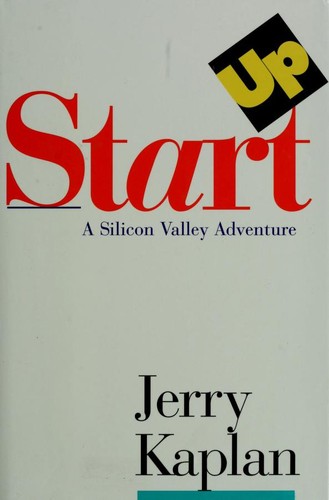
Startup by Jerry Kaplan is a 1994 business book about entrepreneurship, silicon valley, venture capital. Timing is as important as technology. GO had the right product vision but arrived before the hardware and networks could support it commercially.
Summary
Startup is Jerry Kaplan's account of GO Corporation, the pen-computing company he co-founded in 1987 and ran until it collapsed in 1994. GO raised over $75 million, attracted engineers from Xerox PARC and Apple, and was convinced it had built the future of computing — a tablet-based pen interface that would replace the keyboard-and-mouse paradigm. Microsoft and IBM both tried to kill it. AT&T eventually acquired it, then abandoned it. The book tells that story with unusual candor.
What makes Startup distinctive among tech failure memoirs is Kaplan's willingness to describe the social machinery of Silicon Valley in uncomfortable detail. The fundraising meetings, the board politics, the moment when a venture capitalist signals approval not with words but with a change in body language — Kaplan captures these dynamics with a novelist's eye for texture. The reader sees how deals actually get made, how loyalty shifts when the cap table changes, and how a company can be technically ahead of its time and still fail for reasons that have little to do with technology.
The pen computing thesis wasn't wrong, exactly — it was roughly a decade early. The iPad arrived in 2010 and validated most of GO's core ideas. Kaplan is good at analyzing this particular kind of failure: not stupidity or fraud, but a correct hypothesis deployed in the wrong window. He argues that timing is a strategic variable in the same way that product quality or distribution is, and that Silicon Valley's mythology of the visionary founder systematically underweights it.
The book reads fast and the characters are vivid. Bill Gates and Andy Grove appear as they actually behave in competitive situations — not as villains, but as formidable players protecting their own franchises. The ending, when Kaplan describes the final dissolution of GO and the dispersal of its team, is genuinely affecting. For anyone trying to understand how technology startups live and die, Startup remains a clear-eyed primary source.
Talk to Startup like its author wrote you back.
Get the ideas that fit your life — not generic summaries.
- Chat with the book
- Audiobook-style main ideas
- Adapts to your life and goals
- Helps you take action
Key takeaways
- 1.
Timing is as important as technology. GO had the right product vision but arrived before the hardware and networks could support it commercially.
- 2.
Venture fundraising is a performance with its own social codes. Reading the room — literally — matters as much as the deck you've prepared.
- 3.
Large incumbents (Microsoft, IBM) don't need to build a better product to kill a startup. They need only to create enough uncertainty to dry up investment and customer confidence.
- 4.
Board dynamics change when a company is under financial pressure. People who were allies in the growth phase become adversaries when exit strategies diverge.
- 5.
The entrepreneurial narrative tends to attribute success to vision and failure to bad luck. Kaplan shows that failure usually involves both bad luck and real mistakes, and is worth examining with more honesty than the industry typically allows.
- 6.
Technical talent is not sufficient. GO's engineering was strong; its ability to survive in a market where two dominant players had strategic incentives to make it fail was not.
- 7.
The culture of Silicon Valley in the late 1980s — its optimism, its appetite for risk, its casual disregard for what had come before — is captured here in a way that later histories tend to sanitize.
Discussion questions
Use these on your own, with a book club, or as chat starters in Superbook. Book club version, ready to copy or print →
- 1.
Kaplan argues that timing is a strategic variable. Think of a project or venture you've been part of. How much of its outcome was determined by timing versus execution?
- 2.
GO was technically ahead of its time. Is it better to be early with a right idea or late with a refined one? What does the GO story suggest?
- 3.
Kaplan describes the fundraising process in unusual social detail. Does knowing how deals actually get made change how you think about the startup mythology of the meritocratic idea?
- 4.
Microsoft and IBM used platform power to undermine GO without necessarily building a better pen OS. How do you distinguish legitimate competition from predatory behavior?
- 5.
The board eventually diverged from Kaplan's vision. Have you ever been in an institution where the interests of founders and investors (or founders and shareholders) came apart? How did it resolve?
- 6.
GO raised $75 million and failed. What obligations does a company have to the people it hired and the investors it took money from when it fails?
- 7.
Kaplan is notably candid about his own mistakes. What decisions does he describe that you think you would have made differently, and why?
- 8.
The pen computing vision GO had was vindicated by the iPad fifteen years later. Does that posthumous vindication change how you evaluate Kaplan's leadership?
- 9.
Silicon Valley tends to celebrate the swings-and-misses ethos — fail fast, learn, repeat. Does Startup reinforce or challenge that narrative?
- 10.
What does Kaplan's account suggest about what founders owe their employees, especially when a company is likely to fail?
- 11.
The book was published in 1994. Which parts of the Silicon Valley culture it describes feel like history, and which feel like a description of something still very much present?
Themes
Frequently asked questions
-
Is Startup by Jerry Kaplan still relevant today?
Yes. The technology has changed but the dynamics Kaplan describes — venture fundraising rituals, platform competition, board politics under stress — remain recognizable. The book is especially useful as a corrective to the sanitized success narratives that dominate startup culture.
-
What happened to GO Corporation?
GO was acquired by AT&T in 1993 and shut down shortly after. The pen computing platform it built never reached commercial scale, though its core thesis — touchscreen tablet computing — was vindicated by devices like the iPad, which launched in 2010.
-
How long is Startup?
About 300 pages, which most readers finish in five to six hours. The narrative moves quickly; Kaplan writes with a journalist's economy and the chapters are short.
-
Who should read Startup?
Founders, investors, and anyone working inside a technology company who wants an unvarnished look at how startups actually operate under competitive and financial pressure. It's also a good read for people interested in computing history specifically — the late 1980s and early 1990s were a pivotal period.
-
What's the most honest thing Kaplan admits in the book?
That GO's failure was partly the result of his own decisions, not just bad luck or Microsoft's interference. He's unusually direct about moments when he chose optimism over realism, and the costs that came with those choices.
Similar books
The Hard Thing About Hard Things
Ben Horowitz
Lost and Founder
Rand Fishkin
Bad Blood: Secrets and Lies in a Silicon Valley Startup
John Carreyrou
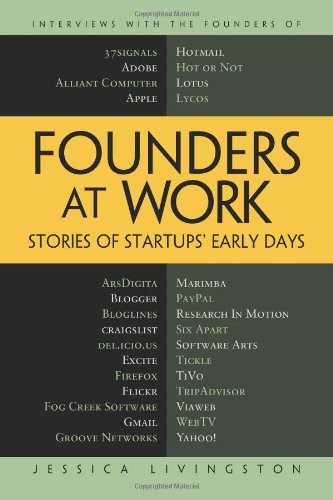
Founders at Work: Stories of Startups' Early Days
Jessica Livingston
