Talk to Team of Rivals: The Political Genius of Abraham Lincoln like its author wrote you back.
Get the ideas that fit your life — not generic summaries.
- Chat with the book
- Audiobook-style main ideas
- Adapts to your life and goals
- Helps you take action
What it argues
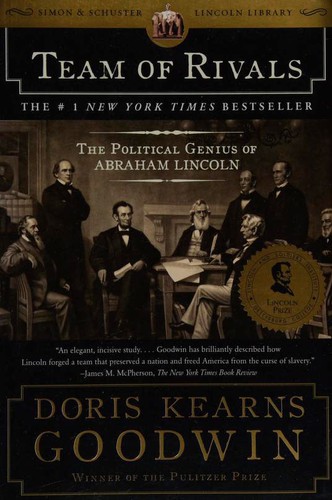
Doris Kearns Goodwin's account of Abraham Lincoln's formation of his cabinet — which included his three main rivals for the 1860 Republican nomination: William Seward, Salmon Chase, and Edward Bates — is one of the most widely discussed leadership books of the twenty-first century and one of the most readable biographies of the Lincoln era. Published in 2005, it was the book President Obama cited most frequently as informing his own approach to assembling a cabinet of rivals, and it provided the basis for Steven Spielberg's 2012 film Lincoln.
The book's structure is its argument. By following Seward, Chase, and Bates from their own beginnings through to the 1860 nomination, and then tracking their service under Lincoln, Goodwin can show what was remarkable about Lincoln's political intelligence through contrast. Where the others were prideful, easily wounded, and prone to factional thinking, Lincoln was comfortable with criticism, strategically patient, and able to subordinate his own ego to the goal he was pursuing. This is not hagiography — Goodwin is attentive to Lincoln's political calculations and occasional duplicity — but she argues convincingly that his emotional intelligence was his most unusual quality.
What it gets right
- 1.
Assembling rivals rather than loyalists signals a confidence in one's own ability to hold a team together. Lincoln's cabinet choice reflected this confidence and also his understanding that the nation's best people needed to be involved.
- 2.
Emotional intelligence in leadership means managing your own ego and understanding others' motivations without judging them by your own standards.
- 3.
The Emancipation Proclamation was both a moral act and a strategic calculation. Lincoln timed it to maximize its political and military impact, which does not diminish its moral significance.
What it covers
Who wrote it
Doris Kearns Goodwin is an American historian and political commentator who served as a White House Fellow under Lyndon Johnson and has written major biographies of Johnson, Franklin and Eleanor Roosevelt, and the Kennedy family. She received the Pulitzer Prize for No Ordinary Time: Franklin and Eleanor Roosevelt: The Home Front in World War II in 1995. Team of Rivals, published in 2005, was her most commercially successful book and the one most frequently cited by political leaders as influential. She has been a regular presence on American television as a presidential historian.
