Thriller · Book club
Tell No One book club questions
Here are 12 book club questions for Tell No One by Harlan Coben, ordered to open easily and end somewhere worth arguing about. Copy them, print them, or bring them up one at a time.
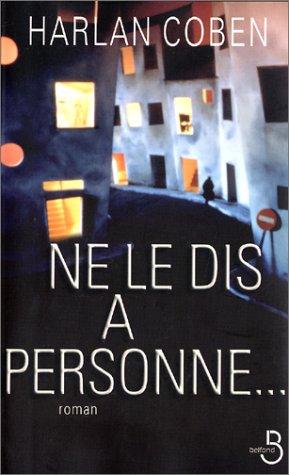
Tell No One is a standalone thriller by Harlan Coben published in 2001.
Harlan Coben · 2001 · 6h 0m
Full summary and key takeaways →The 12 questions
- 1.
David received an email that appeared to come from his dead wife and did not immediately dismiss it. What does that tell you about where he was emotionally after eight years?
- 2.
The central question — how much can you know the person you love? — runs beneath the thriller plot. Does the book resolve it satisfactorily, or does it sidestep it?
- 3.
Coben layers revelation on revelation through the second half of the book. At what point did you stop trying to predict the explanation and just read?
- 4.
The multiple people keeping secrets from David turn out, mostly, to have been doing so to protect him. Does that motivation make the deception forgivable in the novel's moral logic?
- 5.
How does David's professional identity as a pediatrician shape how you read his emotional state and his judgment throughout the investigation?
- 6.
The French adaptation of Tell No One (Ne le dis à personne) was critically acclaimed. Based on the novel, what elements do you think translated especially well to film?
- 7.
The book's villains are eventually explained in terms of greed and fear rather than ideology or pathology. Is that a more or less satisfying type of antagonist for a thriller?
- 8.
What does the childhood setting — the lake, the summer, the hideaway — contribute to the novel's emotional register? Would it work as well if the marriage had been shorter?
- 9.
Coben's pacing is famously propulsive. Were there moments where the pace felt like it was hiding a weakness in the logic, or did the speed serve the story?
- 10.
Tell No One is a standalone in a career full of series books. What specifically about the story required a standalone? Could David Beck have continued?
- 11.
The book asks readers to accept a significant degree of coincidence in the plot. At what point, if any, did your suspension of disbelief falter?
- 12.
By the end, do you trust that David Beck understands his wife better or worse than he did at the beginning?
How to run the discussion
- Pick six to eight, not all of them. An hour of real discussion covers fewer questions than anyone expects, and racing the list is what makes a book club feel like homework.
- Open with what people noticed, not what they concluded. Asking for a verdict first hardens opinions before anyone has heard each other.
- Let the disagreement run. The questions below that split a room are the ones worth the time; the ones everyone answers the same way can be skipped.
- Ask the quiet person a specific question. A direct, narrow question is far easier to answer than an open invitation to contribute.
Themes worth steering toward
If the conversation stalls, these are the threads that usually restart it.
Common questions
What are good book club questions for Tell No One?
Here are 12 book club questions for Tell No One by Harlan Coben, ordered to open easily and end somewhere worth arguing about. The strongest openers ask what each reader noticed rather than what they concluded, and the discussion usually turns on grief and denial, secrets and identity, marriage and unknowability.
How long should a book club discussion of Tell No One last?
Most groups run 60 to 90 minutes of actual discussion. That is roughly six to eight questions, not all of them, so pick the ones that suit your group rather than working down the list in order.
What are the main themes in Tell No One?
Grief and denial, Secrets and identity, Marriage and unknowability, Institutional corruption, Love as distortion. Those are the threads most likely to divide a room, which makes them the useful places to steer a discussion that has gone quiet.
Picking the next one? See books like Tell No One or questions for other book club picks.
