Talk to Tender Is the Night like its author wrote you back.
Get the ideas that fit your life — not generic summaries.
- Chat with the book
- Audiobook-style main ideas
- Adapts to your life and goals
- Helps you take action
What it argues
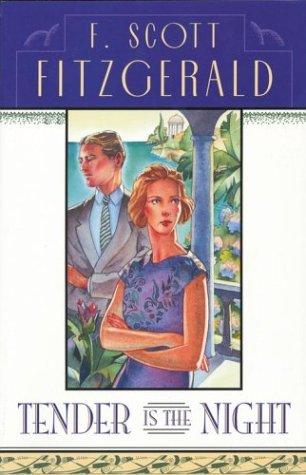
Tender Is the Night follows Dick Diver, a brilliant American psychiatrist, and his wife Nicole — a former patient he married — as they host and dazzle a circle of wealthy expatriates on the French Riviera in the 1920s. When Rosemary Hoyt, a young American actress, arrives and falls in love with Dick, the novel begins the slow, meticulous documentation of his unraveling. Over the following years, Dick dissipates his gifts, drinks, drifts from his career, and loses whatever it was that once made him magnetic. The novel ends with him retreating to small-town upstate New York, largely forgotten.
The book is less about plot than about a particular kind of failure: the gifted man who uses himself up. Dick Diver is partly Fitzgerald writing about himself — by 1934 the author was drinking heavily, and his wife Zelda had suffered a mental breakdown. The novel's central question is whether Dick is destroyed by Nicole's demands, by his own weakness, or by the leisure-class world that absorbed and corrupted him. Fitzgerald refuses a clean answer, and the ambiguity is part of what gives the book its weight. Nicole's trajectory runs opposite to Dick's: she recovers, gains autonomy, and leaves.
What it gets right
- 1.
Dick Diver's decline is never reducible to a single cause — Nicole's illness, his own alcoholism, the corruption of leisure — and that resistance to explanation is the novel's most honest quality.
- 2.
Fitzgerald inverts the usual gender dynamic: Nicole is the patient who recovers and gains power; Dick is the caretaker who is consumed by his own caretaking.
- 3.
The Riviera in the novel is both beautiful and predatory. The expatriate leisure class is rendered with glamour and with contempt, sometimes in the same sentence.
What it covers
Who wrote it
F. Scott Fitzgerald (1896–1940) was an American novelist and short story writer whose work came to define the Jazz Age. He is best known for The Great Gatsby (1925), though he considered Tender Is the Night his most ambitious work. Fitzgerald published four novels and more than 160 short stories, but struggled financially and creatively for much of his career. He died at 44, largely believing himself forgotten. His reputation was substantially rehabilitated after World War II, and he is now considered one of the central figures in American literary history.
