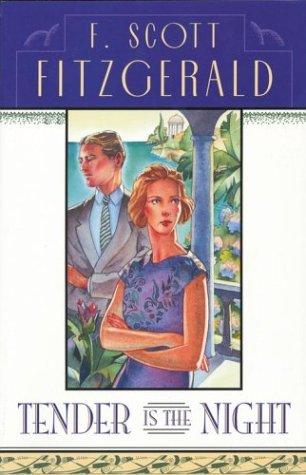
Tender Is the Night by F. Scott Fitzgerald is a 1934 classics book about decline and dissolution, mental illness, class and expatriate life. Dick Diver's decline is never reducible to a single cause — Nicole's illness, his own alcoholism, the corruption of leisure — and that resistance to explanation is the novel's most honest quality.
Summary
Tender Is the Night follows Dick Diver, a brilliant American psychiatrist, and his wife Nicole — a former patient he married — as they host and dazzle a circle of wealthy expatriates on the French Riviera in the 1920s. When Rosemary Hoyt, a young American actress, arrives and falls in love with Dick, the novel begins the slow, meticulous documentation of his unraveling. Over the following years, Dick dissipates his gifts, drinks, drifts from his career, and loses whatever it was that once made him magnetic. The novel ends with him retreating to small-town upstate New York, largely forgotten.
The book is less about plot than about a particular kind of failure: the gifted man who uses himself up. Dick Diver is partly Fitzgerald writing about himself — by 1934 the author was drinking heavily, and his wife Zelda had suffered a mental breakdown. The novel's central question is whether Dick is destroyed by Nicole's demands, by his own weakness, or by the leisure-class world that absorbed and corrupted him. Fitzgerald refuses a clean answer, and the ambiguity is part of what gives the book its weight. Nicole's trajectory runs opposite to Dick's: she recovers, gains autonomy, and leaves.
Stylistically this is Fitzgerald at his most ambitious and uneven. The first section, rendering the Riviera summers through Rosemary's dazzled eyes, is among the most beautiful sustained prose he wrote. The middle section, which flashes back to Dick's early career and his treatment of Nicole, is colder and more clinical. The third section, Dick's deterioration, is sometimes brilliant and sometimes labored. The novel took nine years to write and shows the strain, but the strain also gives it a rawness that Gatsby's perfection lacks.
Readers who loved Gatsby's compression may find this exhausting. It is twice as long and considerably messier. But for those interested in Fitzgerald's full range — and in a portrait of a man watching himself fail that has few equals in American fiction — it rewards the investment. Think of it as the novel Gatsby grew up to become.
Talk to Tender Is the Night like its author wrote you back.
Get the ideas that fit your life — not generic summaries.
- Chat with the book
- Audiobook-style main ideas
- Adapts to your life and goals
- Helps you take action
Key takeaways
- 1.
Dick Diver's decline is never reducible to a single cause — Nicole's illness, his own alcoholism, the corruption of leisure — and that resistance to explanation is the novel's most honest quality.
- 2.
Fitzgerald inverts the usual gender dynamic: Nicole is the patient who recovers and gains power; Dick is the caretaker who is consumed by his own caretaking.
- 3.
The Riviera in the novel is both beautiful and predatory. The expatriate leisure class is rendered with glamour and with contempt, sometimes in the same sentence.
- 4.
Dick's genius is social: he is most alive when organizing other people's pleasure. This makes his dissolution uniquely sad, because what he loses is also what made him parasitic.
- 5.
Tender Is the Night is Fitzgerald's most autobiographical novel — Dick's drinking and brilliance and waste track closely to the author's own trajectory in the late 1920s and early 1930s.
- 6.
The novel's structure (three sections with a flashback) was controversial in 1934 and remains awkward, but it creates the disorientation of learning about someone's fall before you understand their rise.
- 7.
Baby Warren, Nicole's cold, calculating sister, is among Fitzgerald's most precise portraits of old-money power: she buys Dick for Nicole as a service and eventually disposes of him the same way.
- 8.
Unlike Gatsby, this novel has no green light — no sustaining illusion. Dick knows what he's losing and watches himself lose it anyway. That self-awareness makes the tragedy more corrosive.
Discussion questions
Use these on your own, with a book club, or as chat starters in Superbook. Book club version, ready to copy or print →
- 1.
Is Dick Diver a victim of Nicole and the Warren money, or does the novel ultimately hold him responsible for his own destruction? Which reading feels more supported by the text?
- 2.
Fitzgerald said he wanted Dick to 'submit to a heroic are, not a tragic one.' Do you read the ending as heroic in any sense, or purely as defeat?
- 3.
Nicole recovers and Dick declines. Does the novel frame this as fair, inevitable, or ironic? Is Nicole's recovery at Dick's expense, or independent of it?
- 4.
The novel was written during Fitzgerald's own serious decline. Does knowing that change how you read Dick, or does it feel too close to be useful?
- 5.
Rosemary's point of view opens the book, but she largely disappears. What does her presence and absence accomplish for the narrative?
- 6.
How does Tender Is the Night compare to Gatsby in your reading? Is the ambition worth the unevenness, or would you prefer the shorter book's precision?
- 7.
Dick Diver is described as having extraordinary charm. Does the novel actually render that charm convincingly, or do you have to take it on faith?
- 8.
Tommy Barban, who eventually takes Dick's place with Nicole, is barely characterized. Is he a failure of the novel, or does his flatness serve a purpose?
- 9.
Baby Warren sees Dick entirely in transactional terms. Is she wrong to? How much of Dick's original motivation in marrying Nicole was therapeutic and how much was ambition?
- 10.
The title is from Keats's 'Ode to a Nightingale.' Does that allusion enrich the novel for you, or does it feel like borrowed weight?
- 11.
Dick ends up in an unnamed small town in upstate New York, mostly forgotten. Is that ending more devastating than a dramatic death would have been?
- 12.
What would you say the novel is ultimately about? One sentence.
Themes
Frequently asked questions
-
Is Tender Is the Night worth reading if I loved Gatsby?
Probably yes, with the caveat that it is longer, messier, and less perfectly controlled. If Gatsby's compression is what you loved, this may frustrate you. But if you want to understand Fitzgerald's full range, Tender Is the Night shows ambitions and psychological depths that Gatsby doesn't attempt.
-
Is Tender Is the Night hard to read?
It's challenging more in structure than in prose. The flashback section in Book Two can disorient readers expecting chronological narrative, and the novel's emotional center takes time to find. The prose itself is often beautiful but sometimes feels overwrought. It rewards patience.
-
What is Tender Is the Night about, without spoilers?
A gifted American psychiatrist and his wife move through the expatriate leisure world of 1920s Europe, and the novel documents his slow dissolution — of career, marriage, and self — over roughly a decade. It's about a particular kind of gifted man who uses himself up and watches himself do it.
-
Why didn't Tender Is the Night sell well when it came out?
It was published in 1934, during the Depression, when the French Riviera world of wealthy expatriates felt remote and even offensive to many readers. The structure also confused critics. Fitzgerald was disappointed and spent years revising the chapter order, but the revised version wasn't published until after his death.
-
Who shouldn't read this book?
Readers looking for propulsive plot, a sympathetic protagonist who acts decisively, or a clear emotional resolution will find Tender Is the Night frustrating. Dick Diver is passive in his decline, and the novel offers no catharsis — just the slow accumulation of loss. If that sounds like a misery read rather than a rich one, skip it.