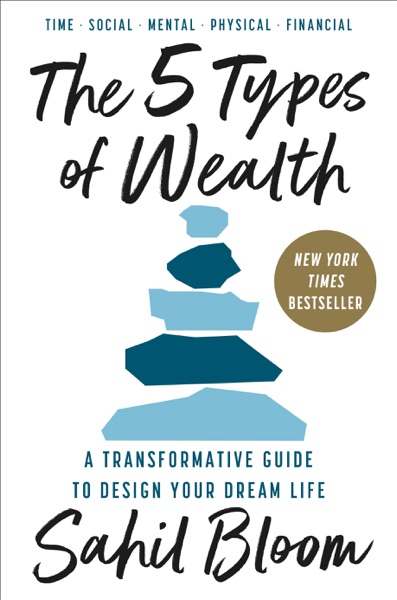
Talk to The 5 Types of Wealth like its author wrote you back.
Get the ideas that fit your life — not generic summaries.
- Chat with the book
- Audiobook-style main ideas
- Adapts to your life and goals
- Helps you take action
The 5 Types of Wealth, in detail
The 5 Types of Wealth is Sahil Bloom's argument that financial wealth is one of five forms of wealth that actually matter, and that pursuing financial wealth at the expense of the other four produces a life that looks successful from the outside but feels hollow from the inside. The five types Bloom identifies are financial, time, social, mental, and physical — and his central claim is that most people optimize aggressively for one (usually financial) while neglecting the others, and then wonder why they don't feel as rich as their bank account suggests.
Bloom writes from personal experience. He spent years in private equity working long hours for high compensation before a conversation with his dying grandfather made him reconsider what he was building. His grandfather had material comfort but had spent decades prioritizing work over presence, and the regret was visible. That story runs through the book as a recurring anchor: wealth that you can't spend on anything that actually matters isn't wealth.
The book is structured around each type of wealth in turn, with practical frameworks for auditing and improving each. Time wealth is about protecting non-negotiable blocks of unscheduled time. Social wealth is about identifying the people who matter most and investing in those relationships deliberately rather than managing a large, thin network. Mental wealth is about psychological security — the freedom from fear and anxiety that comes from knowing who you are and what you value. Physical wealth is health as a foundation, not a vanity project.
Bloom has a large social media following and the book shows that influence. The writing is accessible, warm, and personal. It doesn't make original arguments so much as synthesize existing wisdom — Stoic philosophy, modern psychology, and life advice from successful people — into a framework that works as a practical guide. Readers who have already absorbed the personal finance canon will find some sections familiar. Those coming to these ideas for the first time will find the integration unusually readable.
The big ideas
- 1.
Financial wealth is one of five types of wealth. The others — time, social, mental, and physical — are equally real and often more important to daily quality of life.
- 2.
Optimizing aggressively for financial wealth while neglecting the other four produces the 'success trap': a life that looks rich from the outside and feels poor from the inside.
- 3.
Time wealth requires protecting non-negotiable unscheduled blocks. Filling every hour is a form of poverty regardless of what you're being paid for the hours.
