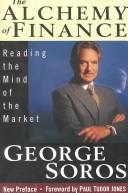
Talk to The Alchemy of Finance like its author wrote you back.
Get the ideas that fit your life — not generic summaries.
- Chat with the book
- Audiobook-style main ideas
- Adapts to your life and goals
- Helps you take action
What it argues
The Alchemy of Finance is George Soros's attempt to explain both the theory behind his investment decisions and the practice of applying it during the years he ran the Quantum Fund. The book is famous for introducing the concept of reflexivity — the idea that market participants' beliefs about a situation affect the situation itself, which in turn changes those beliefs, creating feedback loops that standard economic theory ignores entirely.
Classical economics assumes that markets tend toward equilibrium, that prices reflect fundamentals, and that investors are rational. Soros argues this is wrong at a structural level. Participants don't observe market reality objectively; they participate in it. Their perceptions are partial, biased, and self-interested, and their decisions based on those perceptions alter the very reality they're trying to observe. This is the reflexive loop: perception shapes action, action shapes reality, reality shapes perception again. Boom-and-bust cycles aren't aberrations from an otherwise efficient market — they're the natural result of reflexivity operating without any corrective mechanism.
What it gets right
- 1.
Reflexivity means market participants' beliefs influence the reality they observe, creating self-reinforcing feedback loops that drive boom-and-bust cycles rather than equilibrium.
- 2.
Classical economic theory assumes a world of rational agents moving toward equilibrium. Soros argues this model misses the most important dynamics of real markets.
- 3.
All market participants operate with partial, biased knowledge. There is no God's-eye view of fundamentals, only competing interpretations that themselves become market-moving forces.
What it covers
Who wrote it
George Soros was born in Budapest in 1930 and emigrated to England after World War II, where he studied philosophy under Karl Popper at the London School of Economics. He founded the Quantum Fund in 1969 and became one of the most successful macro investors in history, most famously breaking the Bank of England in 1992 by shorting the pound. He has written several books on economics and politics, including The Crisis of Global Capitalism and The New Paradigm for Financial Markets. Through the Open Society Foundations, he has donated billions to democratic and civil society causes worldwide.
