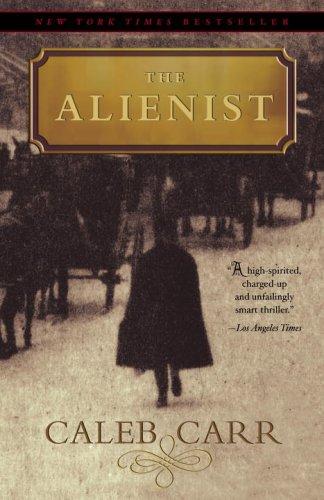
Talk to The Alienist like its author wrote you back.
Get the ideas that fit your life — not generic summaries.
- Chat with the book
- Audiobook-style main ideas
- Adapts to your life and goals
- Helps you take action
The Alienist, in detail
The Alienist is set in 1896 New York City, where Dr. Laszlo Kreizler — an "alienist," the period term for a psychiatrist — is asked by police commissioner Theodore Roosevelt to investigate the murders of boy prostitutes whose bodies have been left on the city's bridges. Kreizler assembles an unofficial team including journalist John Schuyler Moore (the narrator), two progressive-minded detectives, and Sara Howard, a woman working as a secretary in the police commissioner's office who is far sharper than anyone around her wants to acknowledge. Together they attempt something new: building a psychological profile of the killer before he strikes again.
The book's real subject is the collision between a rigidly stratified society and the modern idea that a killer's childhood shapes his violence. Kreizler is a difficult, driven man who believes that environment and trauma produce criminality — a radical view in 1896. The investigation keeps running into institutional resistance from powerful men who want the murders buried, because the victims are social outcasts whose deaths the city prefers not to examine. The novel is as much about who gets protected and who gets discarded as it is about catching a killer.
Carr did serious historical homework. The New York it depicts — the Tenderloin, Delmonico's, Mulberry Street, the original bridge construction — feels genuinely textured rather than decoratively period. Real historical figures appear throughout: Roosevelt, Jacob Riis, J.P. Morgan's son. The criminal psychology, though anachronistic in some ways, tracks closely enough with the early history of the field to feel plausible. The prose is measured and controlled, in keeping with the narrator's journalistic voice.
Readers who enjoy historical crime fiction with intellectual heft will find this rewarding. The pacing is deliberate — Carr is more interested in building the psychology than in chase sequences — and at 150,000 words it asks for commitment. Those who want a propulsive modern thriller will find it slow. But as a novel about the invention of criminal profiling and the 1890s city it springs from, it's unusually well-researched and seriously imagined.
The big ideas
- 1.
The novel dramatizes the actual origins of criminal profiling — the idea that a killer's biography and psychology can be reconstructed from the evidence he leaves behind.
- 2.
Sara Howard is one of the more interesting figures in the book: a woman doing serious intellectual work in a world that won't grant her official authority to do it.
- 3.
Carr shows how institutional power protects certain crimes. The murders continue partly because the victims are expendable in the city's social calculus.
