The Alienist by Caleb Carr is a 1994 historical fiction book about psychology and criminal profiling, gilded age inequality, gender and power. The novel dramatizes the actual origins of criminal profiling — the idea that a killer's biography and psychology can be reconstructed from the evidence he leaves behind.
Summary
The Alienist is set in 1896 New York City, where Dr. Laszlo Kreizler — an "alienist," the period term for a psychiatrist — is asked by police commissioner Theodore Roosevelt to investigate the murders of boy prostitutes whose bodies have been left on the city's bridges. Kreizler assembles an unofficial team including journalist John Schuyler Moore (the narrator), two progressive-minded detectives, and Sara Howard, a woman working as a secretary in the police commissioner's office who is far sharper than anyone around her wants to acknowledge. Together they attempt something new: building a psychological profile of the killer before he strikes again.
The book's real subject is the collision between a rigidly stratified society and the modern idea that a killer's childhood shapes his violence. Kreizler is a difficult, driven man who believes that environment and trauma produce criminality — a radical view in 1896. The investigation keeps running into institutional resistance from powerful men who want the murders buried, because the victims are social outcasts whose deaths the city prefers not to examine. The novel is as much about who gets protected and who gets discarded as it is about catching a killer.
Carr did serious historical homework. The New York it depicts — the Tenderloin, Delmonico's, Mulberry Street, the original bridge construction — feels genuinely textured rather than decoratively period. Real historical figures appear throughout: Roosevelt, Jacob Riis, J.P. Morgan's son. The criminal psychology, though anachronistic in some ways, tracks closely enough with the early history of the field to feel plausible. The prose is measured and controlled, in keeping with the narrator's journalistic voice.
Readers who enjoy historical crime fiction with intellectual heft will find this rewarding. The pacing is deliberate — Carr is more interested in building the psychology than in chase sequences — and at 150,000 words it asks for commitment. Those who want a propulsive modern thriller will find it slow. But as a novel about the invention of criminal profiling and the 1890s city it springs from, it's unusually well-researched and seriously imagined.
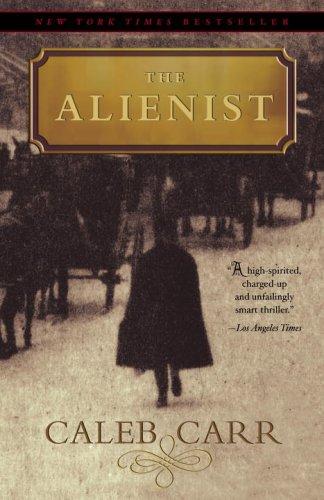
Talk to The Alienist like its author wrote you back.
Get the ideas that fit your life — not generic summaries.
- Chat with the book
- Audiobook-style main ideas
- Adapts to your life and goals
- Helps you take action
Key takeaways
- 1.
The novel dramatizes the actual origins of criminal profiling — the idea that a killer's biography and psychology can be reconstructed from the evidence he leaves behind.
- 2.
Sara Howard is one of the more interesting figures in the book: a woman doing serious intellectual work in a world that won't grant her official authority to do it.
- 3.
Carr shows how institutional power protects certain crimes. The murders continue partly because the victims are expendable in the city's social calculus.
- 4.
Kreizler's own psychology is central — he's both the book's primary investigative intelligence and its most interesting study in how trauma shapes a person.
- 5.
The 1890s New York setting is not decorative. The Gilded Age's extreme inequality — tenements next to mansions — is structurally linked to the killer's origins.
- 6.
The book argues that understanding evil is not the same as excusing it — a distinction Kreizler must defend repeatedly against colleagues who see his methods as immoral.
- 7.
Theodore Roosevelt appears as a genuine historical figure rather than a cameo, young and ambitious and genuinely motivated by reform.
- 8.
The investigation's reliance on unorthodox methods that fall outside official channels anticipates how actual criminal psychology developed: on the margins, resisted by institutions.
Discussion questions
Use these on your own, with a book club, or as chat starters in Superbook. Book club version, ready to copy or print →
- 1.
Kreizler believes the killer was shaped by childhood trauma and social circumstance. Does the novel ask you to agree with him, or does it leave room to push back?
- 2.
Sara Howard has to do expert work while being denied expert status. How does Carr handle her frustration? Does he give her enough agency?
- 3.
The victims are boys from the city's most marginal communities. How does the book handle the question of who gets to be a victim worth investigating?
- 4.
Roosevelt is portrayed sympathetically as a reformer. Does that portrait feel earned, or does it soften a complicated historical figure?
- 5.
Kreizler's methods are unconventional and his team operates outside official sanction. Is that a strength or a problem in terms of the investigation's legitimacy?
- 6.
The killer's backstory, when revealed, involves a pattern of institutional failure. Does knowing the why make the crimes more or less disturbing to you?
- 7.
The novel is narrated by Moore, who is a participant but not the investigative genius. What does Carr gain — or lose — by not making Kreizler the first-person narrator?
- 8.
How does this compare to other historical detective fiction you've read — Umberto Eco's The Name of the Rose, say, or the Sherlock Holmes stories? What does the historical setting add?
- 9.
Institutional corruption blocks the investigation repeatedly. Does the novel suggest that justice is ultimately achievable, or does it have a more pessimistic view of systems?
- 10.
The criminal psychology in the novel is slightly anachronistic — they're using 1896 methods to generate insights that belong more to the 1960s FBI. Does that bother you, or does it feel like acceptable creative license?
- 11.
Who in the novel changes most by the end? Is the change earned?
- 12.
The Gilded Age parallels to contemporary inequality are hard to miss. Does Carr press that parallel too hard, or does he let it speak for itself?
Themes
Frequently asked questions
-
Is The Alienist worth reading if I'm not into historical fiction?
Possibly, if the criminal psychology angle interests you. Carr's treatment of the origins of criminal profiling is substantive and the detective work is genuinely engaging. But the historical texture is inseparable from the story — if period detail slows you down, this one will be a slog.
-
Is there a TV show based on The Alienist?
Yes. TNT aired a well-regarded adaptation in 2018 starring Daniel Brühl as Kreizler, Dakota Fanning as Sara Howard, and Luke Evans as Moore. A second season, The Angel of Darkness, followed in 2020. Both are worth watching, though the book is richer.
-
What is The Alienist about, in brief?
An 1896 New York investigation into the murders of boy prostitutes, conducted by a psychologist, a journalist, and an unusually capable woman working against institutional resistance. It's partly a thriller, partly a historical novel about how criminal psychology got started.
-
Who shouldn't read this book?
Readers who want fast-paced crime fiction. The Alienist is long, deliberate, and often more interested in building the psychological portrait than in chase sequences. It also deals with violence against children, which some readers will find difficult.
-
Is The Angel of Darkness as good as The Alienist?
Most readers find it somewhat lighter and less focused, though it expands Sara Howard's role significantly. If you love The Alienist, it's worth reading. If you're on the fence, start with The Alienist and see whether you want to return to these characters.
Similar books
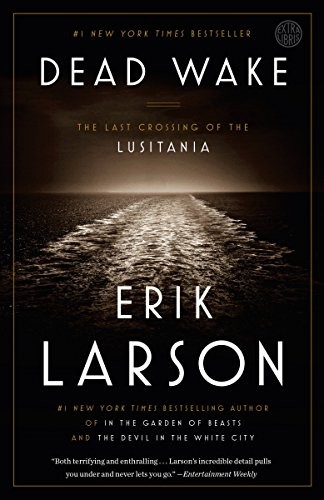
Dead Wake: The Last Crossing of the Lusitania
Erik Larson
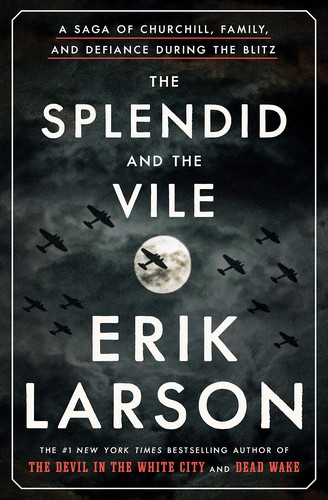
The Splendid and the Vile: A Saga of Churchill, Family, and Defiance During the Blitz
Erik Larson
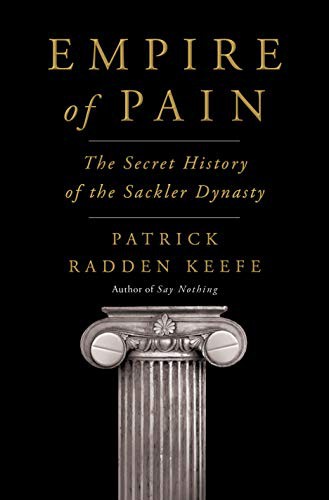
Empire of Pain: The Secret History of the Sackler Dynasty
Patrick Radden Keefe
The Spy and the Traitor: The Greatest Espionage Story of the Cold War
Ben Macintyre
