Talk to The Amazing Adventures of Kavalier & Clay like its author wrote you back.
Get the ideas that fit your life — not generic summaries.
- Chat with the book
- Audiobook-style main ideas
- Adapts to your life and goals
- Helps you take action
The Amazing Adventures of Kavalier & Clay, in detail
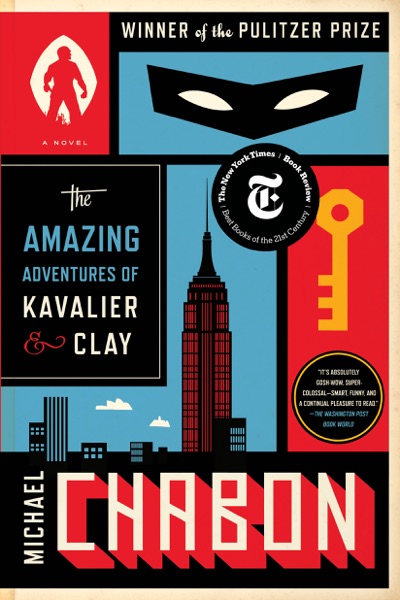
The Amazing Adventures of Kavalier & Clay is Michael Chabon's Pulitzer Prize-winning novel about two Jewish cousins — Josef Kavalier, a refugee from Nazi-occupied Prague, and Sam Clay (born Sammy Klayman), a Brooklyn dreamer — who together create one of the golden age's great superhero franchises in late-1930s New York. It is a sprawling, inventive, deeply felt novel about escape: from occupied Europe, from poverty, from shame, from the self.
Josef arrives in America having escaped Prague in a trunk with the help of a Golem, an episode that establishes the book's central preoccupation. Escape — physical, emotional, artistic — is what comics do, and it is what Kavalier and Clay's fictional hero, the Escapist, does for a living. Chabon is interested in the actual history of American comics as an art form created largely by young Jewish men in the 1930s and 1940s, and he renders that world in rich, precise detail: the grueling work schedules, the exploitative contracts, the genuine creative excitement, and the way superhero stories about fighting fascism gave young men without options a way to feel agency they didn't have in real life.
The novel's emotional core is the relationship between Joe and Sammy: their friendship, their creative partnership, and the different kinds of damage they carry. Joe cannot escape his obsession with rescuing his younger brother from Prague, and the war gradually hollows him out. Sammy navigates his homosexuality in an era that offers no safe path. Chabon handles both trajectories with the kind of structural patience that only long novels allow — the consequences of early choices arrive slowly and feel earned.
The book is long and stylistically extravagant. Chabon writes with an aesthetic joy that sometimes tips into showmanship, and readers who prefer spare fiction may find the density demanding. But the rewards are proportional. The final third, which shifts in setting and register, deepens everything that came before. As a novel about art, friendship, loss, and the strange consolations that stories offer people with nowhere else to go, it is genuinely exceptional.
The big ideas
- 1.
Escape, in Chabon's telling, is not cowardice. It is an act of imaginative resistance — the insistence that the self can exist outside whatever cage is built around it.
- 2.
The golden age of American comics was largely the creation of young Jewish immigrants and their children, and their work encoded real anxieties about fascism and statelessness that mainstream culture wouldn't directly address.
- 3.
Art made under constraint — deadlines, exploitation, limited materials — can still be transcendent. Kavalier and Clay's best work emerges from the least dignified circumstances.
