History · Book club
Annals of Imperial Rome book club questions
Here are 12 book club questions for Annals of Imperial Rome by Tacitus, ordered to open easily and end somewhere worth arguing about. Copy them, print them, or bring them up one at a time.
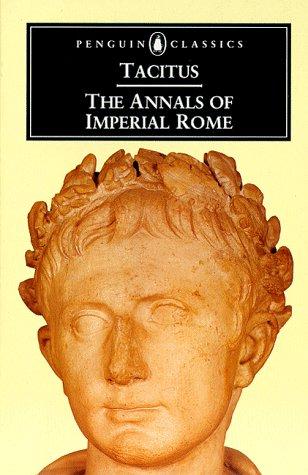
Tacitus wrote the Annals in the early second century CE as a history of Rome from the death of Augustus to the death of Nero — the reigns of Tiberius, Caligula, Claudius, and Nero, covering roughly 14 to 68 CE.
Tacitus · 1598 · 11h 45m
Full summary and key takeaways →The 12 questions
- 1.
Tacitus claims to write without indignation or partiality but his style is deeply ironic and judgmental. Does this undermine his credibility or is it a different kind of honesty?
- 2.
The senators who condemned their colleagues under Tiberius were often trying to survive. At what point does tactical collaboration become moral complicity?
- 3.
Tacitus shows the informer system emerging gradually, with each step having a legal rationale. How does this process of normalization apply to political environments you know?
- 4.
Tiberius starts the Annals as a capable if suspicious ruler and ends as a monster of paranoia. What does Tacitus think caused this deterioration — the man or the system?
- 5.
The Annals is almost entirely about the ruling class. What do you think Roman society looked like below the senatorial level, and does Tacitus' silence on that tell you something?
- 6.
Sejanus exercises power without formal authority by controlling access to Tiberius. Where do you see this pattern — power through access rather than title — in contemporary institutions?
- 7.
Tacitus admires those who die rather than compromise their dignity under Nero. Is this a genuinely useful model for political resistance, or an aristocratic luxury?
- 8.
The Annals describes a period when the formal institutions of the republic still existed but had lost their independence. What are the institutional markers of that kind of hollowing out?
- 9.
Claudius is treated with contempt partly because he relied on freedmen rather than senators. How much of Tacitus' hostility to him is class-based rather than principled?
- 10.
The early books on Tiberius are among the most analyzed political texts ever written. What do you think Tacitus was trying to accomplish by writing history about events his readers knew?
- 11.
The Annals has gaps because portions of the manuscript are lost. How does reading a fragmentary historical text differ from reading a complete one?
- 12.
If Tacitus' main argument is that power corrupts and autocracy is structurally self-undermining, what does he think the alternative is?
How to run the discussion
- Pick six to eight, not all of them. An hour of real discussion covers fewer questions than anyone expects, and racing the list is what makes a book club feel like homework.
- Open with what people noticed, not what they concluded. Asking for a verdict first hardens opinions before anyone has heard each other.
- Let the disagreement run. The questions below that split a room are the ones worth the time; the ones everyone answers the same way can be skipped.
- Ask the quiet person a specific question. A direct, narrow question is far easier to answer than an open invitation to contribute.
Themes worth steering toward
If the conversation stalls, these are the threads that usually restart it.
Common questions
What are good book club questions for Annals of Imperial Rome?
Here are 12 book club questions for Annals of Imperial Rome by Tacitus, ordered to open easily and end somewhere worth arguing about. The strongest openers ask what each reader noticed rather than what they concluded, and the discussion usually turns on power, tyranny, corruption.
How long should a book club discussion of Annals of Imperial Rome last?
Most groups run 60 to 90 minutes of actual discussion. That is roughly six to eight questions, not all of them, so pick the ones that suit your group rather than working down the list in order.
What are the main themes in Annals of Imperial Rome?
Power, Tyranny, Corruption, Empire, Political survival. Those are the threads most likely to divide a room, which makes them the useful places to steer a discussion that has gone quiet.
Picking the next one? See books like Annals of Imperial Rome or questions for other book club picks.
