Philosophy · Book club
The Art of War book club questions
Here are 12 book club questions for The Art of War by Sun Tzu, ordered to open easily and end somewhere worth arguing about. Copy them, print them, or bring them up one at a time.
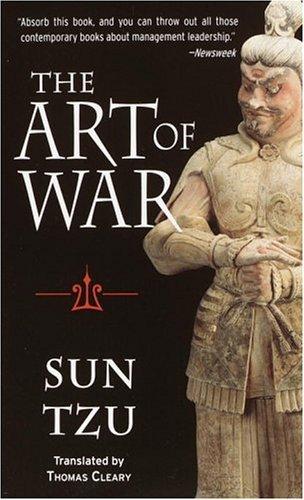
The Art of War is a Chinese military treatise attributed to Sun Tzu, a general and strategist believed to have lived in the fifth century BCE.
Sun Tzu · 1772 · 1h 15m
Full summary and key takeaways →The 12 questions
- 1.
Sun Tzu argues that knowing yourself is as important as knowing your adversary. In a conflict you are currently navigating, how accurately do you understand your own limitations?
- 2.
The book prizes winning without direct confrontation. Can you think of a situation where you fought a battle that positioning or patience could have avoided entirely?
- 3.
Sun Tzu says prolonged conflict exhausts both sides regardless of who wins. Where in your professional or personal life are you sustaining a costly campaign you should resolve or exit?
- 4.
The text insists that deception is a legitimate strategic tool. Where do you draw the line between strategic misdirection and dishonesty in competitive situations?
- 5.
Sun Tzu writes that the wise general chooses terrain before engaging. What does choosing terrain mean in the context of work — and are you consistently in environments where your strengths are relevant?
- 6.
Speed and decisiveness recur throughout the text. What decision in your life is suffering from delay that Sun Tzu would call reckless hesitation?
- 7.
The chapter on spies argues that no investment pays off more than intelligence. How much effort do you put into genuinely understanding the people and organizations you compete or collaborate with?
- 8.
Sun Tzu treats morale as a command responsibility, not a personality trait. Think of a team you have been on where morale was low. What failures of leadership produced it?
- 9.
The book was written about armies but has been applied to business, law, and personal competition. Does that translation feel legitimate to you, or does it stretch the original ideas past their usefulness?
- 10.
Sun Tzu says that if your enemy is superior, evade them; if they are angry, irritate them; if equally matched, fight only when you must. How does this conflict with cultural ideas about confronting challenges directly?
- 11.
What is the most actionable idea from the text in the specific competitive context of your life right now?
- 12.
Many readers encounter The Art of War through secondhand quotations and business-book summaries. Does reading the original change what you thought it said?
How to run the discussion
- Pick six to eight, not all of them. An hour of real discussion covers fewer questions than anyone expects, and racing the list is what makes a book club feel like homework.
- Open with what people noticed, not what they concluded. Asking for a verdict first hardens opinions before anyone has heard each other.
- Let the disagreement run. The questions below that split a room are the ones worth the time; the ones everyone answers the same way can be skipped.
- Ask the quiet person a specific question. A direct, narrow question is far easier to answer than an open invitation to contribute.
Themes worth steering toward
If the conversation stalls, these are the threads that usually restart it.
Common questions
What are good book club questions for The Art of War?
Here are 12 book club questions for The Art of War by Sun Tzu, ordered to open easily and end somewhere worth arguing about. The strongest openers ask what each reader noticed rather than what they concluded, and the discussion usually turns on strategy, leadership, conflict.
How long should a book club discussion of The Art of War last?
Most groups run 60 to 90 minutes of actual discussion. That is roughly six to eight questions, not all of them, so pick the ones that suit your group rather than working down the list in order.
What are the main themes in The Art of War?
Strategy, Leadership, Conflict, Adaptability, Decision-making. Those are the threads most likely to divide a room, which makes them the useful places to steer a discussion that has gone quiet.
Picking the next one? See books like The Art of War or questions for other book club picks.
