Self-help · Book club
The Artist's Way book club questions
Here are 12 book club questions for The Artist's Way by Julia Cameron, ordered to open easily and end somewhere worth arguing about. Copy them, print them, or bring them up one at a time.
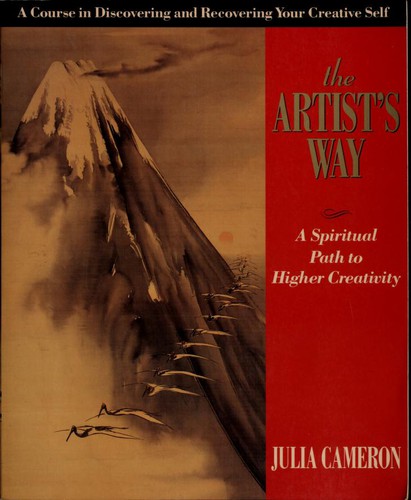
The Artist's Way is Julia Cameron's twelve-week program for recovering and developing creative ability, originally published in 1992 and still widely used in studio groups and classrooms.
Julia Cameron · 1992 · 6h 0m
Full summary and key takeaways →The 12 questions
- 1.
Have you ever done morning pages consistently? What happened — or what do you imagine would happen — when you drain the mental material onto the page rather than carrying it?
- 2.
Cameron's spiritual framing may attract or repel depending on your orientation. Can you extract the practical framework — morning pages, artist dates — from the metaphysics? Do you lose something important in doing so?
- 3.
What is your artist date — the kind of solo, replenishing experience that most reliably fills your creative well? How often do you actually do it?
- 4.
Who are the internal critics whose voices you most consistently hear when you try to create? Can you identify their origins?
- 5.
Are you a shadow artist — someone who lives adjacent to a creative calling rather than in it? What is the adjacent activity, and what is the real one?
- 6.
Cameron argues that taking the first small step toward a creative goal often produces unexpected support. Have you experienced this? What were the circumstances?
- 7.
Morning pages are meant to be written longhand and not reread. What is the purpose of those two constraints? Do they seem important to you?
- 8.
The twelve-week structure of The Artist's Way assumes you'll follow it as a program. Have you done that? If not, what would it take to commit to twelve weeks of morning pages?
- 9.
What was the most damaging thing a teacher, parent, or mentor ever said about your creative work? Do you still carry that criticism?
- 10.
Cameron distinguishes perfectionists from high-standards workers: perfectionists refuse to make the work imperfect; high-standards workers make it and then improve it. Which are you?
- 11.
What single creative act — however small — would be most meaningful to you if you did it consistently for the next year?
- 12.
The book has been in use for over thirty years. What do you think accounts for its durability? What does it address that more contemporary productivity books miss?
How to run the discussion
- Pick six to eight, not all of them. An hour of real discussion covers fewer questions than anyone expects, and racing the list is what makes a book club feel like homework.
- Open with what people noticed, not what they concluded. Asking for a verdict first hardens opinions before anyone has heard each other.
- Let the disagreement run. The questions below that split a room are the ones worth the time; the ones everyone answers the same way can be skipped.
- Ask the quiet person a specific question. A direct, narrow question is far easier to answer than an open invitation to contribute.
Themes worth steering toward
If the conversation stalls, these are the threads that usually restart it.
Common questions
What are good book club questions for The Artist's Way?
Here are 12 book club questions for The Artist's Way by Julia Cameron, ordered to open easily and end somewhere worth arguing about. The strongest openers ask what each reader noticed rather than what they concluded, and the discussion usually turns on creativity, spiritual growth, habits.
How long should a book club discussion of The Artist's Way last?
Most groups run 60 to 90 minutes of actual discussion. That is roughly six to eight questions, not all of them, so pick the ones that suit your group rather than working down the list in order.
What are the main themes in The Artist's Way?
Creativity, Spiritual growth, Habits, Self-discovery, Creative recovery. Those are the threads most likely to divide a room, which makes them the useful places to steer a discussion that has gone quiet.
Picking the next one? See books like The Artist's Way or questions for other book club picks.
