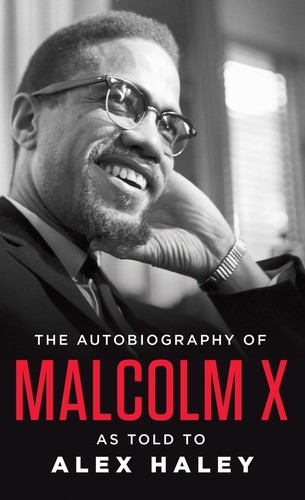
Talk to The Autobiography of Malcolm X like its author wrote you back.
Get the ideas that fit your life — not generic summaries.
- Chat with the book
- Audiobook-style main ideas
- Adapts to your life and goals
- Helps you take action
What it argues
The Autobiography of Malcolm X was assembled from a series of conversations between Malcolm X and the journalist Alex Haley, conducted over two years before Malcolm's assassination in February 1965. It is one of the most important American autobiographies — a first-person account of transformation that covers Malcolm's childhood in Depression-era Michigan, his years as a street hustler and convict in Boston and New York, his conversion to the Nation of Islam in prison, his rise to national prominence as the Nation's most effective spokesman, his break with Elijah Muhammad, and his final reconversion to orthodox Sunni Islam after a pilgrimage to Mecca.
The early chapters document what Haley called the making of an angry man. Malcolm's father, a Baptist minister and follower of Marcus Garvey, was killed when Malcolm was young — almost certainly by white supremacists, though ruled an accident. His mother was institutionalized. Malcolm moved through a series of foster homes and eventually drifted to Boston and Harlem, where he became a drug dealer, numbers runner, and eventually a burglar. His arrest and imprisonment at twenty become, counterintuitively, the fulcrum of his self-education.
What it gets right
- 1.
Identity is not fixed. Malcolm X underwent at least three major transformations of self — from street criminal to Nation of Islam minister to orthodox Muslim internationalist — and the book argues that each was a genuine reinvention.
- 2.
The Nation of Islam provided a psychological counter-narrative to white supremacy. Whatever its theological limitations, it gave Black men in mid-century America a language of self-worth that mainstream society denied them.
- 3.
Malcolm's prison education — autodidactic, voracious, systematic — is one of the book's strongest arguments for the transformative power of reading and study.
What it covers
Who wrote it
Malcolm X (1925–1965) was born Malcolm Little in Omaha, Nebraska. After years of poverty, crime, and imprisonment, he converted to the Nation of Islam and became its most prominent national spokesperson during the late 1950s and early 1960s. He broke with the Nation in 1964, made the Hajj to Mecca, and founded the Organization of Afro-American Unity before his assassination in New York in February 1965. Alex Haley (1921–1992) was an American journalist and author best known for Roots: The Saga of an American Family (1976). The autobiography was assembled from his conversations with Malcolm and published months after the assassination.
