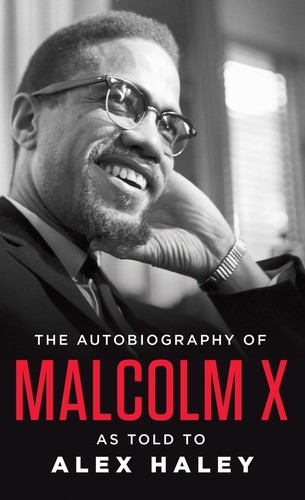
Talk to The Autobiography of Malcolm X like its author wrote you back.
Get the ideas that fit your life — not generic summaries.
- Chat with the book
- Audiobook-style main ideas
- Adapts to your life and goals
- Helps you take action
The Autobiography of Malcolm X, in detail
The Autobiography of Malcolm X was assembled from a series of conversations between Malcolm X and the journalist Alex Haley, conducted over two years before Malcolm's assassination in February 1965. It is one of the most important American autobiographies — a first-person account of transformation that covers Malcolm's childhood in Depression-era Michigan, his years as a street hustler and convict in Boston and New York, his conversion to the Nation of Islam in prison, his rise to national prominence as the Nation's most effective spokesman, his break with Elijah Muhammad, and his final reconversion to orthodox Sunni Islam after a pilgrimage to Mecca.
The early chapters document what Haley called the making of an angry man. Malcolm's father, a Baptist minister and follower of Marcus Garvey, was killed when Malcolm was young — almost certainly by white supremacists, though ruled an accident. His mother was institutionalized. Malcolm moved through a series of foster homes and eventually drifted to Boston and Harlem, where he became a drug dealer, numbers runner, and eventually a burglar. His arrest and imprisonment at twenty become, counterintuitively, the fulcrum of his self-education.
The Nation of Islam chapters are the book's dramatic center. Malcolm describes his conversion as an intellectual awakening, not merely a religious one — the Nation's theology gave him a framework for understanding the degradation he had witnessed and experienced. He became the Nation's most prolific speaker and organizer, building temples across the country, and his rhetoric made him a polarizing national figure. The FBI maintained surveillance on him throughout this period, and the book documents his growing awareness that he was being watched.
The final section is the most unexpected. After his pilgrimage to Mecca, where he prayed alongside white Muslims and reconsidered the Nation's racial absolutism, Malcolm underwent a visible ideological shift toward a more universalist politics. He broke with Elijah Muhammad, founded his own organizations, and was assassinated before completing this transformation. The epilogue by Haley and the final chapters, dictated in the last months of his life, capture a man aware that he was likely to be killed and trying to finish the work he had started.
The big ideas
- 1.
Identity is not fixed. Malcolm X underwent at least three major transformations of self — from street criminal to Nation of Islam minister to orthodox Muslim internationalist — and the book argues that each was a genuine reinvention.
- 2.
The Nation of Islam provided a psychological counter-narrative to white supremacy. Whatever its theological limitations, it gave Black men in mid-century America a language of self-worth that mainstream society denied them.
- 3.
Malcolm's prison education — autodidactic, voracious, systematic — is one of the book's strongest arguments for the transformative power of reading and study.
