The Autobiography of Malcolm X by Malcolm X and Alex Haley is a 1965 memoir book about racial identity, transformation, religion. Identity is not fixed. Malcolm X underwent at least three major transformations of self — from street criminal to Nation of Islam minister to orthodox Muslim internationalist — and the book argues that each was a genuine reinvention.
Summary
The Autobiography of Malcolm X was assembled from a series of conversations between Malcolm X and the journalist Alex Haley, conducted over two years before Malcolm's assassination in February 1965. It is one of the most important American autobiographies — a first-person account of transformation that covers Malcolm's childhood in Depression-era Michigan, his years as a street hustler and convict in Boston and New York, his conversion to the Nation of Islam in prison, his rise to national prominence as the Nation's most effective spokesman, his break with Elijah Muhammad, and his final reconversion to orthodox Sunni Islam after a pilgrimage to Mecca.
The early chapters document what Haley called the making of an angry man. Malcolm's father, a Baptist minister and follower of Marcus Garvey, was killed when Malcolm was young — almost certainly by white supremacists, though ruled an accident. His mother was institutionalized. Malcolm moved through a series of foster homes and eventually drifted to Boston and Harlem, where he became a drug dealer, numbers runner, and eventually a burglar. His arrest and imprisonment at twenty become, counterintuitively, the fulcrum of his self-education.
The Nation of Islam chapters are the book's dramatic center. Malcolm describes his conversion as an intellectual awakening, not merely a religious one — the Nation's theology gave him a framework for understanding the degradation he had witnessed and experienced. He became the Nation's most prolific speaker and organizer, building temples across the country, and his rhetoric made him a polarizing national figure. The FBI maintained surveillance on him throughout this period, and the book documents his growing awareness that he was being watched.
The final section is the most unexpected. After his pilgrimage to Mecca, where he prayed alongside white Muslims and reconsidered the Nation's racial absolutism, Malcolm underwent a visible ideological shift toward a more universalist politics. He broke with Elijah Muhammad, founded his own organizations, and was assassinated before completing this transformation. The epilogue by Haley and the final chapters, dictated in the last months of his life, capture a man aware that he was likely to be killed and trying to finish the work he had started.
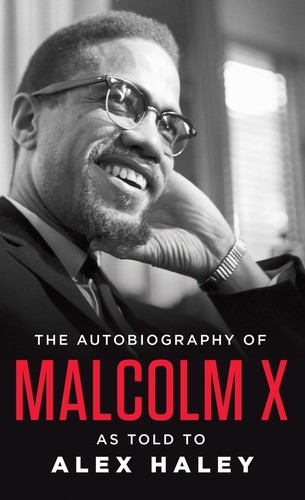
Talk to The Autobiography of Malcolm X like its author wrote you back.
Get the ideas that fit your life — not generic summaries.
- Chat with the book
- Audiobook-style main ideas
- Adapts to your life and goals
- Helps you take action
Key takeaways
- 1.
Identity is not fixed. Malcolm X underwent at least three major transformations of self — from street criminal to Nation of Islam minister to orthodox Muslim internationalist — and the book argues that each was a genuine reinvention.
- 2.
The Nation of Islam provided a psychological counter-narrative to white supremacy. Whatever its theological limitations, it gave Black men in mid-century America a language of self-worth that mainstream society denied them.
- 3.
Malcolm's prison education — autodidactic, voracious, systematic — is one of the book's strongest arguments for the transformative power of reading and study.
- 4.
The FBI's surveillance of Malcolm reveals how the state treats radical Black leadership: as a security threat rather than a legitimate political actor.
- 5.
His critique of integration as a strategy differs from Martin Luther King's not in goal (dignity and equality for Black Americans) but in method and diagnosis. Understanding both positions requires taking both seriously.
- 6.
The Mecca pilgrimage broke down a racial essentialism Malcolm had treated as fact. He encountered devout Muslims of all races and concluded that his framework had been too narrow.
- 7.
The autobiography is a document of unfinished transformation. Malcolm was still revising his politics when he was killed, and the book has to be read as a work in progress rather than a concluded argument.
- 8.
Haley's role as interlocutor and editor shaped the final text. The epilogue makes this collaboration transparent in ways that complicate but do not undermine the autobiographical authority.
Discussion questions
Use these on your own, with a book club, or as chat starters in Superbook. Book club version, ready to copy or print →
- 1.
Malcolm underwent several radical identity transformations. What enabled each one? Were they continuous with each other, or genuinely discontinuous?
- 2.
His critique of integration differs fundamentally from the nonviolent civil rights movement's strategy. Do you find either position more compelling, or does the disagreement reveal something neither side fully grasped?
- 3.
Malcolm describes his prison reading as the most important education of his life. What does that suggest about formal versus informal learning, and about who has access to transformation?
- 4.
The Nation of Islam's theology included racial claims that mainstream science rejected. How should we evaluate a movement whose politics were enabling and whose theology was false?
- 5.
After Mecca, Malcolm said he could no longer describe white people as collectively evil. How do you trace that shift through his final chapters?
- 6.
The autobiography was assembled from interviews rather than composed directly by Malcolm. Does that collaborative mode change what you take it to be — memoir, biography, something else?
- 7.
Malcolm was under FBI surveillance for much of his adult life. Reading the book with that knowledge, what does his public rhetoric look like differently?
- 8.
His father's activism and violent death shaped him profoundly. How much of Malcolm's own politics can be understood as a response to what happened to his father?
- 9.
The book ends before the assassination. Does that absence shape your reading of the final pages? What do you project onto them knowing what came next?
- 10.
Malcolm is often contrasted with Martin Luther King. Is that comparison illuminating or reductive? What does it obscure?
- 11.
The book was controversial when published and is still frequently challenged. What specifically provokes that reaction, and is it the same provocation now as in 1965?
- 12.
What does the book suggest about the relationship between anger and political effectiveness?
Themes
Frequently asked questions
-
Is The Autobiography of Malcolm X still relevant?
It is arguably more widely read now than at any time since publication. Its analysis of systemic racism, its account of radicalization, and its model of self-transformation speak directly to ongoing debates about race, policing, and identity in America.
-
How long does it take to read?
Around eight to ten hours. At nearly 500 pages it is substantial, but the narrative momentum is strong. The early chapters about his street life read almost like crime fiction; the later political sections require slower attention.
-
Who actually wrote the book?
Malcolm dictated and reviewed the manuscript; Alex Haley conducted the interviews, took notes, and shaped the narrative. The epilogue, which Haley wrote after Malcolm's death, explains the collaboration in detail. The voice is Malcolm's, but the structure is a joint production.
-
What was Malcolm X's actual position on white people?
It shifted. During his Nation of Islam years he described white people as collectively evil. After Mecca he reconsidered, saying he had met sincere white Muslims and could no longer make that collective judgment. His final position was still sharply critical of American white supremacy as a system, while allowing for individual white allies.
-
How does this book compare to other civil rights-era memoirs?
It is angrier, more ideologically explicit, and more willing to name its contradictions than most. Unlike King's writings, which sought to persuade white moderates, this book was written for Black Americans and addresses them directly. That difference in intended audience shapes everything about it.