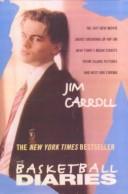
Talk to The Basketball Diaries like its author wrote you back.
Get the ideas that fit your life — not generic summaries.
- Chat with the book
- Audiobook-style main ideas
- Adapts to your life and goals
- Helps you take action
What it argues
The Basketball Diaries is Jim Carroll's account of his teenage years in New York City during the late 1960s, drawn from journals he kept between ages thirteen and sixteen. Carroll was a gifted basketball player and a talented poet attending a Catholic school in Manhattan. The diaries track his slide from promising athlete to heroin addict over roughly three years, rendered in a voice that is raw, funny, and oddly literary from the first page.
What distinguishes the book from standard addiction narratives is Carroll's refusal to sanitize or moralize. He writes about petty crime, prostitution, overdoses, and friends dying not with regret-laden retrospection but in the present tense of someone living through it without any sense of how it ends. The voice shifts between bravado and genuine terror, sometimes within the same paragraph. The city itself — the schoolyards, the piers, the tenements — is rendered with the specificity of someone who loved it even as it destroyed him.
What it gets right
- 1.
Addiction often begins in environments where drugs are simply present and social, not in the dramatic circumstances that cautionary tales imply.
- 2.
Carroll's journals show that adolescent identity and self-destruction can coexist with genuine intelligence, wit, and talent.
- 3.
The book documents how poverty, neglect, and institutional failure create the conditions that turn experimentation into dependency.
What it covers
Who wrote it
Jim Carroll (1949–2009) was an American author, poet, and musician who grew up in New York City. He kept the journals that became The Basketball Diaries between ages thirteen and sixteen, and the book was first published in installments in literary magazines before appearing in full in 1978. Carroll later became known as a punk musician, releasing the album Catholic Boy in 1980, which included the song "People Who Died." He published several collections of poetry and the novel The Petting Zoo before his death in 2009. He is considered a key figure in the New York literary underground of the 1970s.
