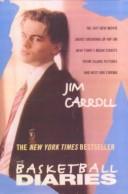
The Basketball Diaries by Jim Carroll is a 1978 memoir book about addiction, adolescence, new york city. Addiction often begins in environments where drugs are simply present and social, not in the dramatic circumstances that cautionary tales imply.
Summary
The Basketball Diaries is Jim Carroll's account of his teenage years in New York City during the late 1960s, drawn from journals he kept between ages thirteen and sixteen. Carroll was a gifted basketball player and a talented poet attending a Catholic school in Manhattan. The diaries track his slide from promising athlete to heroin addict over roughly three years, rendered in a voice that is raw, funny, and oddly literary from the first page.
What distinguishes the book from standard addiction narratives is Carroll's refusal to sanitize or moralize. He writes about petty crime, prostitution, overdoses, and friends dying not with regret-laden retrospection but in the present tense of someone living through it without any sense of how it ends. The voice shifts between bravado and genuine terror, sometimes within the same paragraph. The city itself — the schoolyards, the piers, the tenements — is rendered with the specificity of someone who loved it even as it destroyed him.
Carroll's talent as a poet bleeds into the prose. Sentences arrive with unusual compression. There are passages that read like dispatches from a war nobody is covering, and others that are purely funny in the way teenage boys are funny when they're trying to impress each other. The episodic structure means the book doesn't build toward revelation; it accumulates. By the end the reader has been immersed in a world that operates by its own logic and rewards without ever being asked to condemn it.
The Basketball Diaries was written before Carroll became known as a punk musician, and it predates the recovery-memoir genre that came to dominate writing about addiction. That's part of what makes it last. It doesn't offer the consolation of the narrator having figured things out. It is simply a record of a particular life at a particular moment, preserved by someone who happened to be paying close attention.
Talk to The Basketball Diaries like its author wrote you back.
Get the ideas that fit your life — not generic summaries.
- Chat with the book
- Audiobook-style main ideas
- Adapts to your life and goals
- Helps you take action
Key takeaways
- 1.
Addiction often begins in environments where drugs are simply present and social, not in the dramatic circumstances that cautionary tales imply.
- 2.
Carroll's journals show that adolescent identity and self-destruction can coexist with genuine intelligence, wit, and talent.
- 3.
The book documents how poverty, neglect, and institutional failure create the conditions that turn experimentation into dependency.
- 4.
Carroll writes without the retrospective wisdom of the recovered narrator, which gives the book unusual immediacy and discomfort.
- 5.
New York City in the late 1960s appears as a character itself — dangerous, enabling, and alive in ways the suburbs could not replicate.
- 6.
The episodic diary structure resists neat narrative arcs; life during addiction rarely follows one, and the form reflects that honestly.
- 7.
Poetry and street survival are not opposites in Carroll's world; the same attention that notices a basketball move notices a line of language.
- 8.
The book is a portrait of friendship under extreme conditions — the loyalties, betrayals, and losses that define adolescent life in crisis.
Discussion questions
Use these on your own, with a book club, or as chat starters in Superbook. Book club version, ready to copy or print →
- 1.
Carroll writes with dark humor throughout events that most people would narrate with shame. What does that tonal choice do for the reader's relationship to him?
- 2.
The diaries were written in real time, not reconstructed from memory. How does knowing that change how you read the voice?
- 3.
Carroll's talent is obvious on every page. What does the book suggest about the relationship between creative ability and self-destructive behavior?
- 4.
How much of Carroll's trajectory does the book attribute to individual choice versus environment? Do you agree with that balance?
- 5.
The adults in the book — parents, teachers, priests — are largely absent or useless. What would it have taken for one of them to intervene effectively?
- 6.
Which passages stayed with you most? What does that reveal about what you were looking for in the book?
- 7.
Carroll never asks for the reader's sympathy explicitly. Does he earn it? What does your answer depend on?
- 8.
The New York of the book no longer exists. Does the specificity of that world make the book feel dated, or does it deepen it?
- 9.
The Basketball Diaries was written before Carroll got sober. How would the book be different if it had been written after recovery?
- 10.
Carroll moves between vulnerability and bravado constantly. Is that split authentically adolescent, or is it a literary performance?
- 11.
What does the book have to say about friendship? How do the relationships Carroll describes compare to how male friendship is usually written?
- 12.
If this book were published today as a debut memoir by a teenager, how do you think it would be received?
Themes
Frequently asked questions
-
Is The Basketball Diaries worth reading?
Yes, if you can handle unvarnished accounts of adolescent drug use and street life. The writing is genuinely good — Carroll had real literary ability — and the book's refusal to moralize makes it more honest than most addiction narratives. It's uncomfortable in productive ways.
-
How long does it take to read The Basketball Diaries?
Around four to five hours. The episodic diary structure means chapters are short and the pace moves quickly, but the density of what happens in each entry often makes readers slow down.
-
What is The Basketball Diaries about?
Jim Carroll's teenage years in 1960s New York City, specifically his descent from basketball player and aspiring poet into heroin addiction. It's a diary-based memoir covering roughly ages thirteen to sixteen.
-
Is The Basketball Diaries fiction or nonfiction?
It's presented as nonfiction — Carroll's actual journals from adolescence — though some details may have been shaped in editing. The core events and voice are understood to be genuine.
-
Who should read The Basketball Diaries?
Readers interested in addiction memoirs that predate the recovery-narrative formula, in 1960s New York, or in the intersection of street life and literary voice. Not recommended for those expecting redemption arcs or moral framing.