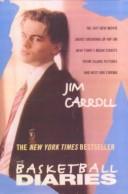
Talk to The Basketball Diaries like its author wrote you back.
Get the ideas that fit your life — not generic summaries.
- Chat with the book
- Audiobook-style main ideas
- Adapts to your life and goals
- Helps you take action
The Basketball Diaries, in detail
The Basketball Diaries is Jim Carroll's account of his teenage years in New York City during the late 1960s, drawn from journals he kept between ages thirteen and sixteen. Carroll was a gifted basketball player and a talented poet attending a Catholic school in Manhattan. The diaries track his slide from promising athlete to heroin addict over roughly three years, rendered in a voice that is raw, funny, and oddly literary from the first page.
What distinguishes the book from standard addiction narratives is Carroll's refusal to sanitize or moralize. He writes about petty crime, prostitution, overdoses, and friends dying not with regret-laden retrospection but in the present tense of someone living through it without any sense of how it ends. The voice shifts between bravado and genuine terror, sometimes within the same paragraph. The city itself — the schoolyards, the piers, the tenements — is rendered with the specificity of someone who loved it even as it destroyed him.
Carroll's talent as a poet bleeds into the prose. Sentences arrive with unusual compression. There are passages that read like dispatches from a war nobody is covering, and others that are purely funny in the way teenage boys are funny when they're trying to impress each other. The episodic structure means the book doesn't build toward revelation; it accumulates. By the end the reader has been immersed in a world that operates by its own logic and rewards without ever being asked to condemn it.
The Basketball Diaries was written before Carroll became known as a punk musician, and it predates the recovery-memoir genre that came to dominate writing about addiction. That's part of what makes it last. It doesn't offer the consolation of the narrator having figured things out. It is simply a record of a particular life at a particular moment, preserved by someone who happened to be paying close attention.
The big ideas
- 1.
Addiction often begins in environments where drugs are simply present and social, not in the dramatic circumstances that cautionary tales imply.
- 2.
Carroll's journals show that adolescent identity and self-destruction can coexist with genuine intelligence, wit, and talent.
- 3.
The book documents how poverty, neglect, and institutional failure create the conditions that turn experimentation into dependency.
