Religion & Spirituality · Book club
The Bhagavad Gita book club questions
Here are 11 book club questions for The Bhagavad Gita by Anonymous, ordered to open easily and end somewhere worth arguing about. Copy them, print them, or bring them up one at a time.
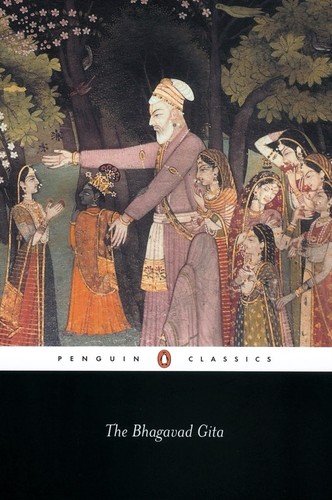
The Bhagavad Gita — the Song of the Lord — is an episode embedded in the Sanskrit epic Mahabharata, composed between the 5th and 2nd centuries BCE.
Anonymous · 1785 · 2h 20m
Full summary and key takeaways →The 11 questions
- 1.
Arjuna's reluctance to fight comes from love — he cannot bear to kill his teachers and kinsmen. Krishna tells him his grief is based on a misunderstanding. Do you find Krishna's response compassionate or cold?
- 2.
The teaching of nishkama karma — action without attachment to results — is one of the most admired ideas in the text. Can you think of a situation in your own life where detachment from outcomes actually helped you perform better?
- 3.
The Gita says performing your own dharma imperfectly is better than doing another's duty well. How do you understand your own dharma — your particular obligation or vocation?
- 4.
The claim that the Self is eternal and cannot be killed has been used to justify violence. Is that a misreading, or is the argument genuinely double-edged?
- 5.
The Gita endorses three main paths — action, knowledge, and devotion. Which of these feels most natural to your own spiritual or ethical temperament?
- 6.
Equanimity — treating pleasure and pain alike — is presented as a mark of wisdom. Is that aspiration admirable or does it flatten something important about human experience?
- 7.
The revelation of Krishna's universal form in Chapter 11 is one of the most awe-inspiring passages in religious literature. What is the emotional and philosophical function of that vision in the narrative?
- 8.
Robert Oppenheimer quoted the Gita after the Trinity test: 'Now I am become death, the destroyer of worlds.' What does that appropriation tell you about the text's range of possible meanings?
- 9.
The Gita was important to Gandhi, who used it to justify nonviolent resistance — the opposite of what Arjuna does. Is that reading sustainable, or does it require too much interpretive work?
- 10.
How do the Gita's metaphysics — the eternal Self, the illusory ego — change the ethical analysis of a situation like the one Arjuna faces?
- 11.
The text says the wise person works for the good of the world, not for personal gain. What would that look like in your own professional life?
How to run the discussion
- Pick six to eight, not all of them. An hour of real discussion covers fewer questions than anyone expects, and racing the list is what makes a book club feel like homework.
- Open with what people noticed, not what they concluded. Asking for a verdict first hardens opinions before anyone has heard each other.
- Let the disagreement run. The questions below that split a room are the ones worth the time; the ones everyone answers the same way can be skipped.
- Ask the quiet person a specific question. A direct, narrow question is far easier to answer than an open invitation to contribute.
Themes worth steering toward
If the conversation stalls, these are the threads that usually restart it.
Common questions
What are good book club questions for The Bhagavad Gita?
Here are 11 book club questions for The Bhagavad Gita by Anonymous, ordered to open easily and end somewhere worth arguing about. The strongest openers ask what each reader noticed rather than what they concluded, and the discussion usually turns on duty, action, the self.
How long should a book club discussion of The Bhagavad Gita last?
Most groups run 60 to 90 minutes of actual discussion. That is roughly six to eight questions, not all of them, so pick the ones that suit your group rather than working down the list in order.
What are the main themes in The Bhagavad Gita?
Duty, Action, The self, Devotion, Liberation. Those are the threads most likely to divide a room, which makes them the useful places to steer a discussion that has gone quiet.
Picking the next one? See books like The Bhagavad Gita or questions for other book club picks.
