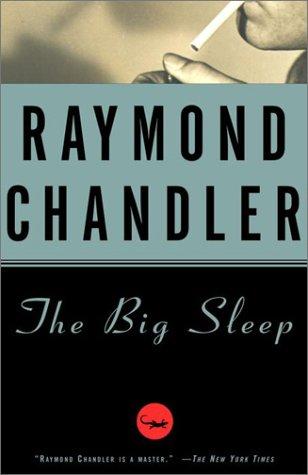
Talk to The Big Sleep like its author wrote you back.
Get the ideas that fit your life — not generic summaries.
- Chat with the book
- Audiobook-style main ideas
- Adapts to your life and goals
- Helps you take action
The Big Sleep, in detail
Philip Marlowe is hired by a very old, very rich man to deal with a blackmail situation involving his younger daughter. Within a day, there are two bodies. The case multiplies — pornography, gambling, missing persons, mob connections — and never fully resolves into a tidy solution. Chandler famously could not explain who killed the chauffeur, and when Howard Hawks and the screenwriters asked him, he admitted he didn't know either. This does not matter, and understanding why it doesn't matter is the key to understanding what The Big Sleep actually is.
The novel is not primarily interested in the solution to the murder. It is interested in Los Angeles, in money, in what corruption looks like when it extends from the street level up through the wealthiest families in the city. The Sternwood family — the paralyzed patriarch, the predatory younger daughter, the reckless older one — functions as a portrait of how American wealth accumulates and what it eventually becomes. Marlowe moves through this world not as a solver but as a witness, a man with a code in a place that has none.
Chandler's prose is the argument. The similes — among the most quoted in American fiction — are not decoration but analysis: they describe the Los Angeles of 1939 with the precision of someone who found it both beautiful and rotten. The hardboiled style that Chandler refined (and Hammett pioneered) is as much a moral position as a literary technique: the clipped, unsentimental voice refuses to glamorize what it describes, which is itself a kind of integrity.
Readers who need plot resolution will struggle. Readers who want to know what makes the hard-boiled style foundational — why Raymond Chandler got into the Library of America and most crime writers don't — will find this essential. The Big Sleep reads quickly, and the pleasures are largely in the sentences and the atmosphere rather than the mechanics of the mystery. It is as much a novel about Los Angeles as it is a detective story.
The big ideas
- 1.
Chandler's similes are not stylistic tics but moral commentary — each one re-describes familiar Los Angeles in terms that strip away its glamour.
- 2.
Marlowe operates on a personal code in a world that has none: he is not naive about corruption but refuses to participate in it, which is the novel's definition of integrity.
- 3.
The plot is deliberately complex and partially unresolved — Chandler's subject is not the solution to the murder but the texture of a corrupt world.
