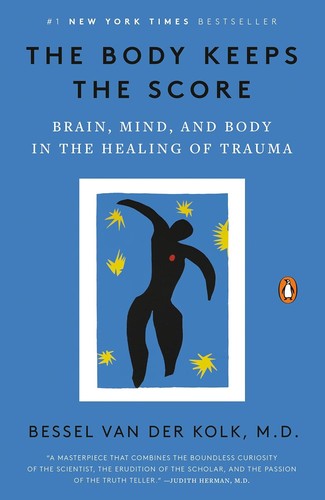
The Biology of Belief by Bruce H. Lipton is a 2005 health book about epigenetics, mind-body connection, cell biology. Cells respond primarily to environmental signals through membrane proteins, not to genetic instructions from the nucleus; the membrane, not the DNA, is the functional brain of the cell.
Summary
The Biology of Belief is Bruce Lipton's argument that cells are controlled by signals from their environment rather than by genetic programs, and that human beings, as collections of cells, are therefore more powerfully shaped by their beliefs and perceptions than by their DNA. Lipton, a former medical school professor and cell biologist, builds his case from cellular biology: specifically from his research on the membrane proteins that regulate what enters and exits a cell. He argues that the standard model of gene-as-blueprint is a fundamental misreading of how biology actually works.
The book's core scientific argument draws on signal transduction — the process by which cells detect and respond to environmental signals. Lipton argues that the cell membrane, not the nucleus, is the brain of the cell, and that the proteins in the membrane respond to chemical signals from the environment by altering which genes are expressed. Applied to the whole organism, this becomes the claim that the chemical environment of your cells — which is substantially shaped by your emotional and psychological state through the stress response and neuroendocrine signaling — determines your biological functioning in ways that dwarf genetic predisposition.
Lipton extends this to what he calls the primacy of the subconscious mind: most of our automatic responses, he argues, are programmed in early childhood before we have conscious agency, and running these programs creates the chemical environment our cells inhabit. Changing your biology, on this account, requires reprogramming subconscious beliefs, not just consciously choosing better behaviors. He devotes the book's later sections to this claim, drawing on neuroscience of early development and approaches like hypnotherapy and energy psychology.
The book has been widely criticized within the scientific community for overstating its claims and misrepresenting mainstream biology. Lipton is a legitimate cell biologist, but the leap from cellular signal transduction to the primacy of belief as a biological force involves several steps the evidence does not cleanly support. Readers who approach it as an interesting extension of genuine ideas in epigenetics and psychoneuroimmunology will get something from it; those who treat it as settled science will be on shakier ground than the confident tone suggests.
Talk to The Biology of Belief like its author wrote you back.
Get the ideas that fit your life — not generic summaries.
- Chat with the book
- Audiobook-style main ideas
- Adapts to your life and goals
- Helps you take action
Key takeaways
- 1.
Cells respond primarily to environmental signals through membrane proteins, not to genetic instructions from the nucleus; the membrane, not the DNA, is the functional brain of the cell.
- 2.
Gene expression is substantially regulated by the chemical environment surrounding cells, which includes hormones and neuropeptides released in response to psychological states.
- 3.
Beliefs and perceptions shape biology by creating the chemical environment — stress hormones, inflammatory signals — that cells actually inhabit moment to moment.
- 4.
The stress response and the growth response are mutually exclusive: a cell cannot simultaneously defend and grow, which is why chronic stress suppresses repair, reproduction, and immune function.
- 5.
Most automatic behaviors and emotional responses run from subconscious programs installed in early childhood, before conscious reasoning developed.
- 6.
Epigenetics has demonstrated that gene expression is dynamically regulated and that heritable changes can occur without changes to the DNA sequence itself.
- 7.
The placebo effect is evidence that belief produces real biological change; it is not a statistical artifact but a demonstration of the mind's causal role in physiology.
- 8.
Changing deeply habitual responses requires working at the level of subconscious programming, not just conscious intention — which is why willpower alone rarely produces lasting change.
Discussion questions
Use these on your own, with a book club, or as chat starters in Superbook. Book club version, ready to copy or print →
- 1.
Lipton argues that the cell membrane, not the nucleus, is the brain of the cell. How does this reframing challenge or align with how you were taught to think about genetics?
- 2.
The claim that beliefs shape biology is the book's central provocation. What evidence from your own life, if any, suggests that psychological state meaningfully affects physical health?
- 3.
Lipton says the stress response and growth response cannot run simultaneously. What are the conditions in your life that keep you predominantly in stress mode, and what would shifting that require?
- 4.
The book argues that most of your behavioral programs were installed in early childhood before you had agency. How comfortable are you with that claim, and how does it interact with your sense of personal responsibility?
- 5.
Lipton uses the placebo effect as evidence that belief produces biological change. Do you find this convincing, and what are the limits of that evidence?
- 6.
If your subconscious beliefs are running your biology, what do you think they are — and how would you even find out?
- 7.
The book has been criticized by mainstream biologists for overstating its claims. How do you navigate books that make provocative scientific arguments that sit outside the mainstream?
- 8.
Lipton argues that reprogramming subconscious beliefs (through hypnotherapy, energy psychology, etc.) is more effective than willpower. Have you tried anything like that, and what was your experience?
- 9.
The connection between early childhood experience and adult biological patterns is a theme across several fields. Where do you see your own childhood programming operating in your adult health or behavior?
- 10.
Does framing health problems as rooted in subconscious belief feel empowering or like it places too much blame on the individual?
- 11.
What one belief about your own body or health might be worth examining — not necessarily changing, but examining — after reading this book?
Themes
Frequently asked questions
-
What is The Biology of Belief about?
The book argues that beliefs and perceptions, not genes, are the primary regulators of cellular biology. Drawing on cell membrane research and epigenetics, Lipton claims that the chemical environment generated by psychological states shapes health more than genetic predisposition.
-
Is The Biology of Belief scientifically credible?
Lipton has genuine credentials in cell biology and some of his references to signal transduction and epigenetics are scientifically grounded. However, mainstream biologists have criticized the book for overstating what the evidence supports. It is better read as a provocative extension of real ideas than as an accurate summary of scientific consensus.
-
Who should read The Biology of Belief?
Readers interested in the intersection of mind, belief, and physical health who are comfortable engaging with claims that exceed current scientific consensus. People already drawn to integrative medicine, consciousness studies, or the healing power of belief will find Lipton's framework interesting. Conventional scientists will find it frustrating.
-
What is the most useful practical takeaway from The Biology of Belief?
The distinction between the stress response and the growth response, and the recognition that chronic stress biologically suppresses repair and immune function. This is well-supported by mainstream research and provides a clear biological reason for the lifestyle interventions — stress management, adequate sleep, emotional regulation — recommended across integrative health.
-
How does The Biology of Belief relate to epigenetics?
Lipton was writing about gene-environment interactions before epigenetics became widely known, and the book anticipates some of that science. The relationship is genuine but not as tight as the book implies — mainstream epigenetics supports the idea that environment influences gene expression, but does not validate all of Lipton's broader claims about belief and cellular control.