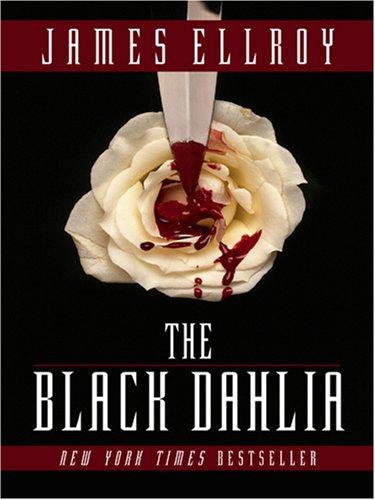
Talk to The Black Dahlia like its author wrote you back.
Get the ideas that fit your life — not generic summaries.
- Chat with the book
- Audiobook-style main ideas
- Adapts to your life and goals
- Helps you take action
The Black Dahlia, in detail
In January 1947, the body of Elizabeth Short — a young woman who wanted to be an actress — is found mutilated in a vacant lot in Los Angeles. The case quickly becomes a media circus: Short is posthumously christened the Black Dahlia, and her murder remains unsolved to this day. James Ellroy takes the actual case as the scaffolding for a novel about what happens when two LAPD detectives become consumed by a dead woman neither of them knew.
The narrator is Dwight "Bucky" Bleichert, a former boxer turned detective who is partnered with Lee Blanchard, a war-hero cop with a beautiful girlfriend named Kay. The Dahlia case tears all three of them apart in different ways. Lee becomes unhinged, disappearing into the investigation. Bucky becomes obsessed with Elizabeth Short for reasons that are partly attraction, partly guilt, partly projection. Kay becomes something more than Bucky can name. The murder investigation is real, but the novel is about the damage done to the living by an unsolvable death.
Ellroy's first entry in the L.A. Quartet is rawer than what he'd write later, closer to traditional noir in structure and more nakedly emotional. The compressed telegraphic style he'd perfect in L.A. Confidential is already present but not yet dominant. The prose has moments of genuine excess, and the final act's revelations veer toward melodrama. None of that fully undermines the novel's power: the portrait of 1940s Los Angeles — its racism, its corruption, its hunger for celebrity — is damning, and Bucky's psychological unraveling is among the more honest accounts of male obsession in crime fiction.
This is the right first novel to read if you're entering the L.A. Quartet. It is less plotted than L.A. Confidential but more emotionally direct, and it establishes the world and the LAPD machinery that the later books rely on. If you find Ellroy's darkness too much here, the later books are not lighter.
The big ideas
- 1.
The Black Dahlia is not a whodunit — the point is what the unsolvable murder does to the men who investigate it and the city that cannot stop consuming it.
- 2.
Ellroy based the novel partly on his own mother's unsolved murder, and that autobiographical weight is present on every page about a dead woman reduced to a media symbol.
- 3.
Elizabeth Short is simultaneously the novel's center and its absence — she is mostly known through rumor, projection, and others' desires, which is part of Ellroy's argument.
