The Black Dahlia by James Ellroy is a 1987 mystery book about obsession and fixation, los angeles mythology, violence against women. The Black Dahlia is not a whodunit — the point is what the unsolvable murder does to the men who investigate it and the city that cannot stop consuming it.
Summary
In January 1947, the body of Elizabeth Short — a young woman who wanted to be an actress — is found mutilated in a vacant lot in Los Angeles. The case quickly becomes a media circus: Short is posthumously christened the Black Dahlia, and her murder remains unsolved to this day. James Ellroy takes the actual case as the scaffolding for a novel about what happens when two LAPD detectives become consumed by a dead woman neither of them knew.
The narrator is Dwight "Bucky" Bleichert, a former boxer turned detective who is partnered with Lee Blanchard, a war-hero cop with a beautiful girlfriend named Kay. The Dahlia case tears all three of them apart in different ways. Lee becomes unhinged, disappearing into the investigation. Bucky becomes obsessed with Elizabeth Short for reasons that are partly attraction, partly guilt, partly projection. Kay becomes something more than Bucky can name. The murder investigation is real, but the novel is about the damage done to the living by an unsolvable death.
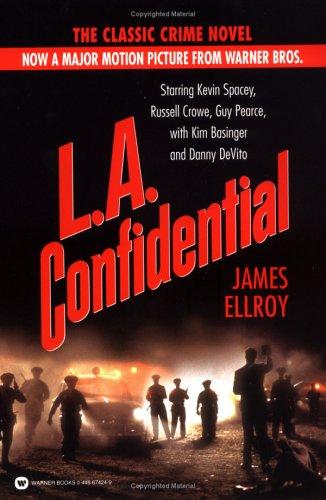
Ellroy's first entry in the L.A. Quartet is rawer than what he'd write later, closer to traditional noir in structure and more nakedly emotional. The compressed telegraphic style he'd perfect in L.A. Confidential is already present but not yet dominant. The prose has moments of genuine excess, and the final act's revelations veer toward melodrama. None of that fully undermines the novel's power: the portrait of 1940s Los Angeles — its racism, its corruption, its hunger for celebrity — is damning, and Bucky's psychological unraveling is among the more honest accounts of male obsession in crime fiction.
This is the right first novel to read if you're entering the L.A. Quartet. It is less plotted than L.A. Confidential but more emotionally direct, and it establishes the world and the LAPD machinery that the later books rely on. If you find Ellroy's darkness too much here, the later books are not lighter.
Talk to The Black Dahlia like its author wrote you back.
Get the ideas that fit your life — not generic summaries.
- Chat with the book
- Audiobook-style main ideas
- Adapts to your life and goals
- Helps you take action
Key takeaways
- 1.
The Black Dahlia is not a whodunit — the point is what the unsolvable murder does to the men who investigate it and the city that cannot stop consuming it.
- 2.
Ellroy based the novel partly on his own mother's unsolved murder, and that autobiographical weight is present on every page about a dead woman reduced to a media symbol.
- 3.
Elizabeth Short is simultaneously the novel's center and its absence — she is mostly known through rumor, projection, and others' desires, which is part of Ellroy's argument.
- 4.
The male gaze is not invisible in this novel; it is the subject. Bucky's obsession with the Dahlia and with Kay is scrutinized, not endorsed.
- 5.
1940s Los Angeles under the surface of the noir fantasy is a city of police brutality, housing segregation, and corrupt alliances between law enforcement and organized crime.
- 6.
The novel introduces Ellroy's world — the LAPD as institution, the interconnection of crime, politics, and celebrity — that the L.A. Quartet will systematically excavate.
- 7.
The pacing is deliberately uneven: the first hundred pages are lean procedural, and then the investigation spirals into personal history and private obsession.
- 8.
The final revelations are operatic in scale, and that excess is partly intentional — Ellroy is writing about the way violence and celebrity manufacture mythology.
Discussion questions
Use these on your own, with a book club, or as chat starters in Superbook. Book club version, ready to copy or print →
- 1.
Bucky narrates the novel, but he is not a reliable reporter on his own psychology. What is he not admitting about his fixation on Elizabeth Short?
- 2.
Elizabeth Short appears only through others' accounts and Bucky's imagination. Does the novel succeed in making her a person rather than just a symbol?
- 3.
Lee Blanchard's breakdown is the emotional center of the first half. What does his disintegration say about the cost of witnessing violence professionally?
- 4.
Kay is a complex figure — survivor, lover, secret-keeper. How does the novel treat her versus how Bucky treats her?
- 5.
The actual Black Dahlia case was never solved. How does Ellroy's fictional solution sit with you — is it satisfying, or does it feel like an imposition on something that should remain open?
- 6.
Ellroy's mother was murdered when he was a child, and that event clearly drives the novel. Does knowing that change how you read the treatment of Elizabeth Short?
- 7.
The LAPD in this novel is corrupt, violent, and racially brutal. Is Ellroy criticizing the institution, mourning it, or something else?
- 8.
Compared to L.A. Confidential, which came three years later — does this feel like a rougher draft of the same world, or is it doing something the later novel doesn't?
- 9.
The novel's final act involves revelations about multiple characters' hidden lives. Did those revelations feel earned or contrived?
- 10.
The media's construction of the Black Dahlia as a celebrity corpse is a constant background noise. What does Ellroy seem to be saying about the American appetite for murdered women?
- 11.
Bucky and Lee are presented as contrasting police types. By the end of the novel, has either of them come out better morally?
- 12.
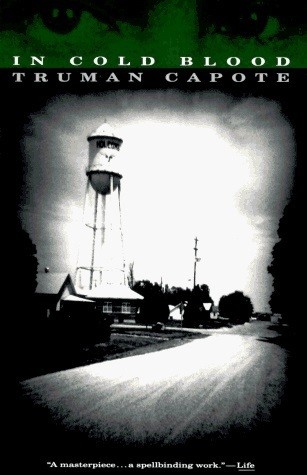
If you've read In Cold Blood alongside this — both are built around real murders that remain famous. How do Capote and Ellroy differ in what they want the reader to feel?
Themes
Frequently asked questions
-
Is The Black Dahlia based on a real murder?
Yes. Elizabeth Short was murdered in Los Angeles in January 1947. Her case was extensively covered by the press and remains officially unsolved. Ellroy's solution is fictional, and the novel's main characters are invented, though some real figures appear.
-
Do I need to know the real Black Dahlia case to read the novel?
No. Ellroy provides enough context, and the real case's actual details are less important than the media mythology around it, which the novel addresses directly.
-
Should I read The Black Dahlia before L.A. Confidential?
Ideally yes. It introduces the LAPD world and sets up the moral and institutional context the later books build on. But L.A. Confidential stands alone if you want to start there.
-
Is The Black Dahlia as good as L.A. Confidential?
Most critics say no — L.A. Confidential is tighter, more formally accomplished, and more politically sophisticated. The Black Dahlia is rawer and more emotionally direct. They do different things.
-
Who shouldn't read The Black Dahlia?
Readers who are sensitive to graphic depictions of violence against women — the murder scenes are not softened. Also readers who want resolution: the novel's solution is elaborate but does not dispel the darkness.