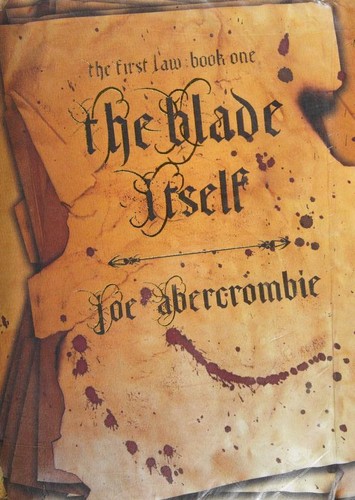
Talk to The Blade Itself like its author wrote you back.
Get the ideas that fit your life — not generic summaries.
- Chat with the book
- Audiobook-style main ideas
- Adapts to your life and goals
- Helps you take action
The Blade Itself, in detail
The Blade Itself is the first book of the First Law trilogy, a grimdark fantasy that opened with a deliberate challenge to the genre's conventions: the barbarian is not particularly heroic, the noble knight is not particularly noble, and the crippled torturer employed by the Inquisition is probably the most interesting person in the room. Abercrombie introduces three main viewpoint characters — Logen Ninefingers, Jezal dan Luthar, and Sand dan Glokta — along with the mysterious First of the Magi, Bayaz, who has plans for all of them that remain opaque through the first volume.
The book is genuinely about what violence does to people rather than what violence accomplishes for them. Logen is a feared barbarian warrior trying to escape his reputation and largely failing; Glokta is a former champion torturer who was himself tortured for years and now finds the work grimly apt; Jezal is a narcissistic young nobleman who is slowly being forced to confront that he is not the hero of his own story. Abercrombie cycles through these perspectives with considerable wit — the book is funnier than its reputation suggests — and the contrast between Jezal's self-regard and everyone else's assessment of him produces most of the dark comedy.
Abercrombie is working in the tradition that George R.R. Martin opened with A Song of Ice and Fire, but The First Law is more consistent in its pessimism and arguably more interested in character psychology than world-politics. The magic system is deliberately vague and potentially sinister. Bayaz, who presents as a helpful mentor, is given enough unsettling moments that the reader learns early not to trust the frame.
Volume one functions primarily as setup — the three main characters don't really converge until book two. Readers who find the first book too slow are usually told to push through, that the trilogy's conclusion rewards the patience. That is true, but volume one is worth reading as a standalone introduction to characters who become genuinely complex and surprising. For readers who want fantasy that takes seriously the question of what happens to people who do terrible things, this is essential.
The big ideas
- 1.
Grimdark fantasy at its best isn't nihilism — it's moral seriousness. Abercrombie uses genre conventions as targets precisely because they let him examine what those conventions normalize.
- 2.
Glokta is one of the most compelling POV characters in modern fantasy: intelligent, broken, self-aware about the horror of what he does, and oddly sympathetic.
- 3.
The book's humor is dark but genuine. The contrast between Jezal's self-image and his actual character is played for comedy as much as critique.
