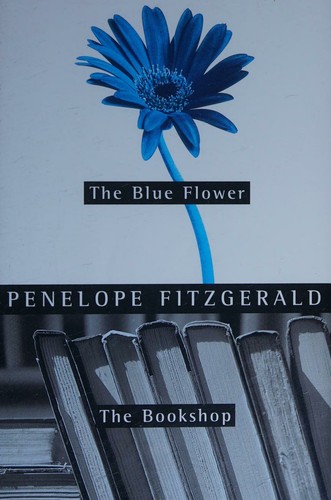
Talk to The Blue Flower like its author wrote you back.
Get the ideas that fit your life — not generic summaries.
- Chat with the book
- Audiobook-style main ideas
- Adapts to your life and goals
- Helps you take action
What it argues
The Blue Flower is a novel about the German Romantic poet Novalis — born Friedrich von Hardenberg — and specifically about his inexplicable, passionate attachment to a twelve-year-old girl, Sophie von Kühn, whom he met when he was twenty-two and who died of tuberculosis at fifteen before he could marry her. Fitzgerald dramatizes the attachment without explaining it and without either endorsing or condemning it. The novel holds the reader in a position of suspended judgment that is one of its most distinctive achievements.
The novel is very short and structured in a series of brief, almost cinematic scenes that jump forward and backward in time. Fitzgerald's period detail is remarkable — the late eighteenth-century German Romantic milieu, the von Hardenberg household with its many siblings and its Pietist father, the cramped winter interiors and the muddy roads — but the detail is never explanatory. Fitzgerald trusts the reader to inhabit the period without narrating it. What she does narrate, precisely, is the movement of minds: what it felt like to believe, as the Romantics did, that the world had a hidden spiritual unity that art could reveal, and what it meant when reality failed to cooperate.
What it gets right
- 1.
Fitzgerald refuses to explain or moralize the Novalis-Sophie relationship. She holds it in suspension, which is harder and more honest than either condemnation or romanticism.
- 2.
The blue flower is the central image of German Romanticism: a symbol of beauty, longing, and the endlessly receding ideal. Fitzgerald uses it without ever reducing it to a single meaning.
- 3.
The brief, discontinuous scene structure is a formal choice about historical consciousness — we see the past in flashes, as it survives in records, not as a continuous present.
What it covers
Who wrote it
Penelope Fitzgerald (1916–2000) was a British novelist who published her first novel at sixty and her final novel, The Blue Flower, at seventy-nine. Her earlier books drew on personal experience — The Bookshop (1978) on a failed bookshop she ran, Offshore (1979), which won the Booker Prize, on life on a houseboat. Her late novels, including Innocence, The Gate of Angels, and The Beginning of Spring, are more formally ambitious historical fictions. She is widely regarded as one of the finest British prose stylists of the twentieth century, though she remained little-known outside literary circles for most of her career.
