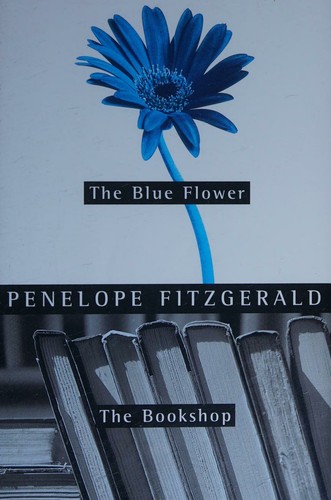
The Blue Flower by Penelope Fitzgerald is a 1995 historical fiction book about romantic idealism, love and reality, the romantic movement. Fitzgerald refuses to explain or moralize the Novalis-Sophie relationship. She holds it in suspension, which is harder and more honest than either condemnation or romanticism.
Summary
The Blue Flower is a novel about the German Romantic poet Novalis — born Friedrich von Hardenberg — and specifically about his inexplicable, passionate attachment to a twelve-year-old girl, Sophie von Kühn, whom he met when he was twenty-two and who died of tuberculosis at fifteen before he could marry her. Fitzgerald dramatizes the attachment without explaining it and without either endorsing or condemning it. The novel holds the reader in a position of suspended judgment that is one of its most distinctive achievements.
The novel is very short and structured in a series of brief, almost cinematic scenes that jump forward and backward in time. Fitzgerald's period detail is remarkable — the late eighteenth-century German Romantic milieu, the von Hardenberg household with its many siblings and its Pietist father, the cramped winter interiors and the muddy roads — but the detail is never explanatory. Fitzgerald trusts the reader to inhabit the period without narrating it. What she does narrate, precisely, is the movement of minds: what it felt like to believe, as the Romantics did, that the world had a hidden spiritual unity that art could reveal, and what it meant when reality failed to cooperate.
The blue flower of the title is from a dream Novalis describes: a boy searching for an endless blue flower that is both object and symbol of the Romantic longing — the thing desired that recedes as you approach it. Sophie, as Novalis conceives her, is his blue flower. Fitzgerald is unsentimental about this. She shows Sophie as a real, limited, cheerful girl, not as a mystical avatar, and the gap between who Sophie actually is and who Novalis requires her to be is where the novel lives.
The Blue Flower is a short book that repays very slow reading. Fitzgerald won the National Book Critics Circle Award for it in 1997, and it is routinely cited as among the best British novels of the 1990s. Readers who want action or resolution may find it slight. Readers who admire economy, precision, and the rendering of ideas through lived scene will find it close to perfect.
Talk to The Blue Flower like its author wrote you back.
Get the ideas that fit your life — not generic summaries.
- Chat with the book
- Audiobook-style main ideas
- Adapts to your life and goals
- Helps you take action
Key takeaways
- 1.
Fitzgerald refuses to explain or moralize the Novalis-Sophie relationship. She holds it in suspension, which is harder and more honest than either condemnation or romanticism.
- 2.
The blue flower is the central image of German Romanticism: a symbol of beauty, longing, and the endlessly receding ideal. Fitzgerald uses it without ever reducing it to a single meaning.
- 3.
The brief, discontinuous scene structure is a formal choice about historical consciousness — we see the past in flashes, as it survives in records, not as a continuous present.
- 4.
Sophie is rendered as fully real rather than as an ideal figure, and the gap between Novalis's vision of her and Fitzgerald's actual Sophie is the novel's primary tension.
- 5.
The von Hardenberg household — crowded, religious, affectionate, occasionally chaotic — is rendered with a warmth that prevents the philosophical sections from becoming too rarefied.
- 6.
Fitzgerald's research was extensive. Her German is accurate, her period detail is verifiable, and her portrait of the Jena Romantics circle is one of the few fictional treatments that takes their philosophy seriously rather than merely using them as backdrop.
- 7.
The novel is short because Fitzgerald believed in radical compression. Every sentence carries weight. The experience of reading it is unusual: very fast and very dense simultaneously.
- 8.
Novalis's early death — at twenty-eight, four years after Sophie's — is not described but is felt throughout the novel as the doom already encircling him.
Discussion questions
Use these on your own, with a book club, or as chat starters in Superbook. Book club version, ready to copy or print →
- 1.
Fitzgerald refuses to psychologize Novalis's attachment to the twelve-year-old Sophie. Does that restraint feel like wisdom or evasion?
- 2.
Sophie is consistently rendered as ordinary, cheerful, and unintellectual. Does this feel like Fitzgerald's critique of idealization, or does it risk rendering Sophie as a prop in Novalis's story?
- 3.
The blue flower itself is described but never achieved. How does Fitzgerald manage the symbol without letting it become either cliché or pretension?
- 4.
The scene structure is deliberately fragmented. Did this feel like a precise formal choice about the nature of historical knowledge, or did it create a distance you couldn't fully inhabit?
- 5.
Fitzgerald won the National Book Critics Circle Award for this novel. What do you think the prize was recognizing — the prose? The research? The moral intelligence?
- 6.
The novel is very short. Did the brevity feel like mastery or like something missing? What would you have wanted more of?
- 7.
The Romantic movement believed art could access a hidden spiritual reality. Does the novel treat that belief with sympathy, irony, or both?
- 8.
Fitzgerald was in her late seventies when she wrote this. Does knowing that change how you read a novel about youth, idealism, and early death?
- 9.
How does Novalis compare to other artists in fiction you've read — Portrait of the Artist, for instance? Is he a more or less sympathetic version of the visionary young man?
- 10.
The domestic life in the von Hardenberg household is rendered with as much attention as Novalis's philosophy. What does the juxtaposition of philosophy and laundry do for the novel?
- 11.
If you read other Fitzgerald novels — The Bookshop, Offshore, The Gate of Angels — how does The Blue Flower compare? If this is your first Fitzgerald, would you read more?
Themes
Frequently asked questions
-
Is The Blue Flower worth reading?
Yes, particularly if you value prose economy and formal precision over plot. It is one of the most controlled historical novels in English — every sentence has been weighed. The subject (a young Romantic poet, his attachment to a dying girl) is not obviously compelling, but Fitzgerald makes it absorbing through intelligence and restraint.
-
Do I need to know about Novalis or German Romanticism to read The Blue Flower?
No. Fitzgerald provides enough context to make Novalis's world legible. Knowing that Novalis was a real historical figure and that the blue flower is a genuine symbol of German Romanticism adds resonance, but the novel does not require specialist knowledge to work.
-
Is The Blue Flower a romance?
It is about romantic attachment, but it is not a romance in any conventional sense. There is no conventional love arc, no consummation, and no happy ending. It is a portrait of idealization — what it looks like from inside and from outside — and what reality does to it.
-
Why is The Blue Flower so short?
Fitzgerald believed in compression. Her novels are uniformly short, and the brevity is a formal position: she trusts the reader to fill in what the novel does not state. The Blue Flower is often called her masterpiece partly because the compression is so precisely calibrated.
-
Who shouldn't read The Blue Flower?
Readers who need narrative momentum, emotional directness, or a resolved ending. The novel is brief, elliptical, and deliberately withholds explanation. If you find fiction that trusts its reader to make inferences unsatisfying, this may feel slight or incomplete.