Talk to The Bogleheads' Guide to Investing like its author wrote you back.
Get the ideas that fit your life — not generic summaries.
- Chat with the book
- Audiobook-style main ideas
- Adapts to your life and goals
- Helps you take action
The Bogleheads' Guide to Investing, in detail
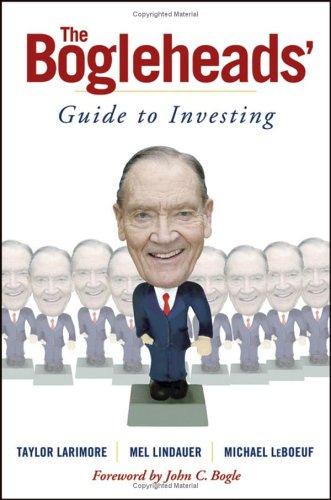
The Bogleheads' Guide to Investing is Taylor Larimore, Mel Lindauer, and Michael LeBoeuf's practical manual for implementing John Bogle's investment philosophy in a complete financial plan. The Bogleheads are the community of investors who follow Bogle's principles — low costs, broad diversification, long-term holding — and who gather on an online forum that began at Morningstar and moved to its own site. The book distills the forum's collective wisdom into a comprehensive guide covering everything from first principles to specific account types to withdrawal strategies in retirement.
The book's approach is explicitly simple and deliberately unpretentious. The authors do not claim to help readers beat the market; they claim to help readers earn the market return with minimal cost and maximum reliability. The core portfolio recommendation is a three-fund portfolio: a total US stock market index fund, a total international stock market index fund, and a total bond market index fund. The proportions depend on age, time horizon, and risk tolerance, but the structure is the same for almost everyone.
The coverage extends well beyond portfolio construction. The book addresses account types and their tax implications in detail: the difference between traditional and Roth IRAs, how to think about 401(k) allocations when the available funds are expensive, how to prioritize different account types when you have limited dollars to invest. There are chapters on insurance (both necessary and unnecessary kinds), estate planning basics, and the selection and evaluation of financial advisors for situations where one is genuinely needed.
The behavioral section is clear-eyed: the authors know their readers will face market downturns and market euphoria, and they spend considerable effort making the case for staying the course. The book ends with a chapter that assembles the key recommendations into a simple financial plan that most readers could implement over a few weekends. For investors who want a comprehensive, evidence-based, practical guide to everything they need to do rather than just the investment philosophy, this book is the most complete single reference available.
The big ideas
- 1.
The three-fund portfolio — total US stock market, total international stock market, total bond market — handles the investment need for most people with minimal complexity.
- 2.
Asset allocation between stocks and bonds is the most important portfolio decision. Everything else (which funds, which brokerage) is secondary.
- 3.
Tax efficiency requires using the right account for each type of holding. Tax-inefficient assets belong in tax-advantaged accounts; tax-efficient assets can go in taxable accounts.
