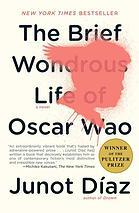
Talk to The Brief Wondrous Life of Oscar Wao like its author wrote you back.
Get the ideas that fit your life — not generic summaries.
- Chat with the book
- Audiobook-style main ideas
- Adapts to your life and goals
- Helps you take action
What it argues
Oscar Wao is an overweight Dominican American nerd from New Jersey who wants nothing more than to find love and write fantasy novels. He never quite finds either. The book follows him from adolescence through young adulthood as he struggles with his weight, his loneliness, and his failed attempts at romance — against the backdrop of a family curse, the fukú, that seems to doom every generation.
Junot Díaz tells Oscar's story in a narrator's voice that is loud, funny, digressive, and occasionally devastating. The narrator, Yunior, is a friend and roommate who fills in the family history: Oscar's mother Hypatia (Beli), raised in the Dominican Republic under Trujillo's dictatorship; his grandfather Abelard, whose fate under the regime initiated the curse. The novel moves back and forth across decades and the Caribbean, arguing that the violence of the Trujillo era left a wound in Dominican families that has never fully healed.
What it gets right
- 1.
The fukú — a curse on the family — is Díaz's way of giving material form to the trauma that dictatorship leaves in its wake, passed from generation to generation.
- 2.
Oscar's nerdiness is not incidental to his Dominicanness — it's in tension with it, and that tension is what the whole novel turns on.
- 3.
Yunior narrates the story, but he is not reliable: his own failures with Oscar haunt the telling, and the novel is partly about his guilt.
What it covers
Who wrote it
Junot Díaz was born in the Dominican Republic and emigrated to the United States as a child, growing up in New Jersey. He is the author of the story collection Drown (1996) and the novel The Brief Wondrous Life of Oscar Wao (2007), which won the Pulitzer Prize for Fiction and the National Book Critics Circle Award. He teaches creative writing at MIT and was a founding editor of the Boston Review. He is known for his Spanglish prose style and for fiction that engages directly with Dominican history and diaspora identity.
