The Brief Wondrous Life of Oscar Wao by Junot Díaz is a 2007 literary fiction book about diaspora identity, generational trauma, love and obsession. The fukú — a curse on the family — is Díaz's way of giving material form to the trauma that dictatorship leaves in its wake, passed from generation to generation.
Summary
Oscar Wao is an overweight Dominican American nerd from New Jersey who wants nothing more than to find love and write fantasy novels. He never quite finds either. The book follows him from adolescence through young adulthood as he struggles with his weight, his loneliness, and his failed attempts at romance — against the backdrop of a family curse, the fukú, that seems to doom every generation.
Junot Díaz tells Oscar's story in a narrator's voice that is loud, funny, digressive, and occasionally devastating. The narrator, Yunior, is a friend and roommate who fills in the family history: Oscar's mother Hypatia (Beli), raised in the Dominican Republic under Trujillo's dictatorship; his grandfather Abelard, whose fate under the regime initiated the curse. The novel moves back and forth across decades and the Caribbean, arguing that the violence of the Trujillo era left a wound in Dominican families that has never fully healed.
The book is distinctive for its form as much as its content. Díaz writes in Spanglish, mixing street slang, academic register, and science fiction references in footnotes that are sometimes longer than the main text. The footnotes carry the historical documentation — Trujillo's atrocities, the real political murders — so that the fantastic and the historical sit directly beside each other on the page. The structural choice is not gimmick: it enacts the way diaspora memory works, the past always interrupting the present.
Readers who love ambitious, voice-driven novels will find this one of the most alive books of the 2000s. Those who want a linear narrative will be frustrated by the digressions. The humor and the horror exist in the same sentences, and some readers find the tonal oscillations hard to track. But it won the Pulitzer for a reason: the ending earns every page that came before it.
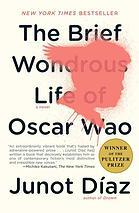
Talk to The Brief Wondrous Life of Oscar Wao like its author wrote you back.
Get the ideas that fit your life — not generic summaries.
- Chat with the book
- Audiobook-style main ideas
- Adapts to your life and goals
- Helps you take action
Key takeaways
- 1.
The fukú — a curse on the family — is Díaz's way of giving material form to the trauma that dictatorship leaves in its wake, passed from generation to generation.
- 2.
Oscar's nerdiness is not incidental to his Dominicanness — it's in tension with it, and that tension is what the whole novel turns on.
- 3.
Yunior narrates the story, but he is not reliable: his own failures with Oscar haunt the telling, and the novel is partly about his guilt.
- 4.
The footnotes function as a second novel running alongside the first — a history of Trujillo's Dominican Republic that contextualizes every personal tragedy.
- 5.
Love in this book is never separate from power: Oscar's desperate need for it mirrors a broader pattern of Dominican masculinity that the novel both depicts and critiques.
- 6.
Diaspora identity is shown not as a fixed thing but as an argument — between countries, between generations, between languages.
- 7.
The novel insists on connecting the intimate (one fat nerd's love life) with the epic (the history of an entire nation under tyranny) without making either feel small.
- 8.
The ending is both tragic and redemptive — Oscar does not survive, but something is returned to the family through his death that language alone cannot explain.
Discussion questions
Use these on your own, with a book club, or as chat starters in Superbook. Book club version, ready to copy or print →
- 1.
Yunior is the narrator, but he was not present for much of what he describes. How much do you trust him? What is he hiding or distorting?
- 2.
The fukú functions as both a literal curse and a metaphor. Does the novel ask you to believe in it, or does it want you to hold both readings at once?
- 3.
Oscar's love of science fiction and fantasy is treated seriously as a way of understanding the world. Is that reading persuasive to you, or does it feel like a conceit?
- 4.
The Trujillo-era sections are brutal. Did you find them necessary to Oscar's story, or did they feel like a separate book?
- 5.
Beli's story is in many ways the novel's emotional center. Why do you think Díaz chose to structure the book so that we get to her life so late?
- 6.
Yunior fails Oscar in a specific and serious way. Is his account of that failure honest, or does it let himself off too easily?
- 7.
The novel is full of humor that sits right next to horror. Did you find that tonal balance effective or destabilizing?
- 8.
What is the 'zafa' — the counter-curse — and do you think the novel ends with it working?
- 9.
How does the treatment of masculinity here compare to another book you've read set in a Caribbean or Latin American context?
- 10.
The footnotes are sometimes very long historical digressions. Did you read them straight through or skip them? How did that choice change the reading experience?
- 11.
Oscar and Lola, his sister, have different strategies for surviving their family. Which do you think works better — and does the novel agree with you?
- 12.
The novel was published in 2007 and won the Pulitzer in 2008. Does it feel like a book of that era, or does it read as contemporary?
Themes
Frequently asked questions
-
Is The Brief Wondrous Life of Oscar Wao worth reading?
Yes, if you are willing to work with a narrator who digresses frequently and a prose style that mixes registers unpredictably. The novel is one of the most energetically written American books of the 2000s, and the emotional payoff is genuine. If you prefer clean linear narratives, it will test your patience.
-
Is Oscar Wao hard to read?
The Spanglish and the footnotes slow some readers down; the structure, which moves across decades and back and forth between New Jersey and the Dominican Republic, can also disorient. It is not difficult at the sentence level, but it demands active engagement with digression and form.
-
What is the fukú in Oscar Wao?
The fukú americanus is a curse that the novel's narrator says came to the New World with the slave trade and has afflicted the family ever since. It functions simultaneously as a supernatural force, a metaphor for colonial trauma, and a way of explaining the disasters that befall every generation.
-
Who shouldn't read Oscar Wao?
Readers who want a straightforward plot or a single narrative timeline will struggle. The novel also contains graphic violence, sexual content, and depictions of dictatorship-era atrocities that some readers find disturbing.
-
Why did Oscar Wao win the Pulitzer?
The Pulitzer citation pointed to its form and its ambition: a novel that fused genre fiction, Latin American history, diaspora experience, and a specific comedy about nerdiness and masculinity into something genuinely new. The emotional force of the ending was widely cited as the moment the novel earned its ambitions.
Similar books
The Moor's Last Sigh
Salman Rushdie
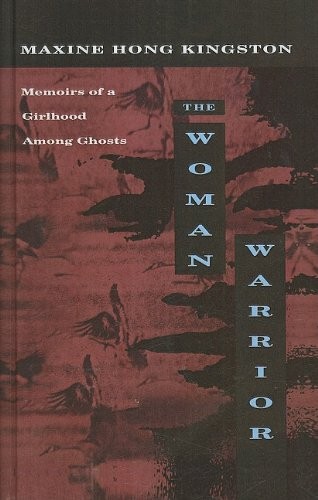
The Woman Warrior: Memoirs of a Girlhood Among Ghosts
Maxine Hong Kingston
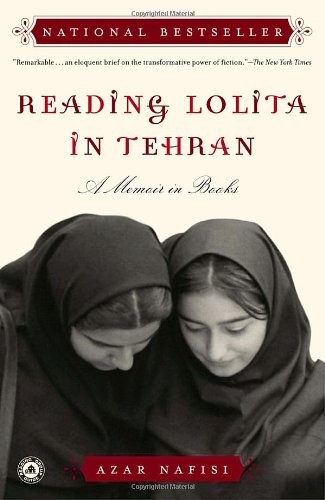
Reading Lolita in Tehran: A Memoir in Books
Azar Nafisi
Beloved
Toni Morrison
