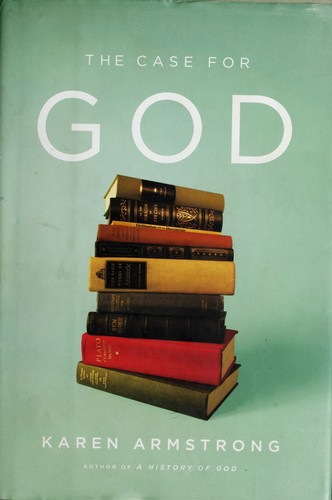
Talk to The Case for God like its author wrote you back.
Get the ideas that fit your life — not generic summaries.
- Chat with the book
- Audiobook-style main ideas
- Adapts to your life and goals
- Helps you take action
The Case for God, in detail
The Case for God is Karen Armstrong's argument that the new atheism misunderstands what sophisticated religious believers in most traditions have actually claimed about God. Armstrong traces the history of religious practice and theology from the Paleolithic era through the present to show that the literalist, propositional God targeted by Richard Dawkins and Christopher Hitchens is a relatively recent construction — largely a product of modernity — not the mainstream of the Jewish, Christian, Islamic, or Buddhist traditions.
Armstrong's central distinction is between logos and mythos. Logos is the mode of rational, empirical thinking suited to solving practical problems. Mythos is the mode of symbolic, narrative thinking that addresses questions of meaning, suffering, and ultimate concern. For most of human history, religion operated in the mythic register: its stories and rituals were not meant as factual descriptions of the cosmos but as transformative practices. The God of the apophatic tradition — the tradition that says we can say nothing positive about God, only what God is not — is not a supernatural being but a symbol pointing toward a mystery beyond language.
The second half of the book traces how the early modern period changed this. The rise of natural philosophy and the scientific revolution put pressure on religion to justify itself in logos terms. Believers responded by turning scripture into a source of factual claims, producing creationism and biblical literalism. The new atheists then attack this literal God and declare victory. Armstrong's case is that they have defeated a straw man — a crude version of religious belief that most serious theologians across the centuries would not have recognized.
Armstrong's argument is historically rich and philosophically careful, but it asks a lot of modern readers. The apophatic tradition and the mystical God are intellectually serious, but they are also quite removed from how many ordinary believers practice their faith. Readers will need to decide whether Armstrong's reconstruction of religion is what they want religion to be, or what it actually is.
The big ideas
- 1.
Most religious traditions distinguished between logos (rational argument) and mythos (symbolic meaning). Religion was understood as a practice, not a set of factual propositions to be believed.
- 2.
The apophatic tradition insists that nothing positive can be said about God. God is not a being among beings, not even the greatest one — 'God' points toward mystery beyond language.
- 3.
Biblical literalism and creationism are modern responses to the scientific revolution, not ancient orthodoxy. The Church Fathers read scripture allegorically as a matter of course.
