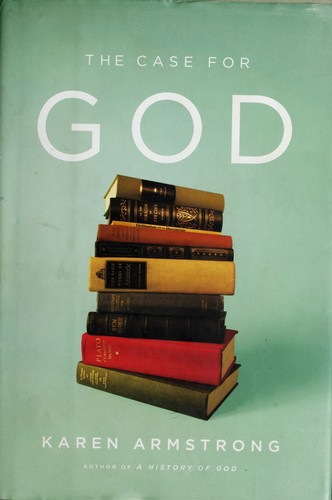
The Case for God by Karen Armstrong is a 2009 religion & spirituality book about religion, theology, mysticism. Most religious traditions distinguished between logos (rational argument) and mythos (symbolic meaning). Religion was understood as a practice, not a set of factual propositions to be believed.
Summary
The Case for God is Karen Armstrong's argument that the new atheism misunderstands what sophisticated religious believers in most traditions have actually claimed about God. Armstrong traces the history of religious practice and theology from the Paleolithic era through the present to show that the literalist, propositional God targeted by Richard Dawkins and Christopher Hitchens is a relatively recent construction — largely a product of modernity — not the mainstream of the Jewish, Christian, Islamic, or Buddhist traditions.
Armstrong's central distinction is between logos and mythos. Logos is the mode of rational, empirical thinking suited to solving practical problems. Mythos is the mode of symbolic, narrative thinking that addresses questions of meaning, suffering, and ultimate concern. For most of human history, religion operated in the mythic register: its stories and rituals were not meant as factual descriptions of the cosmos but as transformative practices. The God of the apophatic tradition — the tradition that says we can say nothing positive about God, only what God is not — is not a supernatural being but a symbol pointing toward a mystery beyond language.
The second half of the book traces how the early modern period changed this. The rise of natural philosophy and the scientific revolution put pressure on religion to justify itself in logos terms. Believers responded by turning scripture into a source of factual claims, producing creationism and biblical literalism. The new atheists then attack this literal God and declare victory. Armstrong's case is that they have defeated a straw man — a crude version of religious belief that most serious theologians across the centuries would not have recognized.
Armstrong's argument is historically rich and philosophically careful, but it asks a lot of modern readers. The apophatic tradition and the mystical God are intellectually serious, but they are also quite removed from how many ordinary believers practice their faith. Readers will need to decide whether Armstrong's reconstruction of religion is what they want religion to be, or what it actually is.
Talk to The Case for God like its author wrote you back.
Get the ideas that fit your life — not generic summaries.
- Chat with the book
- Audiobook-style main ideas
- Adapts to your life and goals
- Helps you take action
Key takeaways
- 1.
Most religious traditions distinguished between logos (rational argument) and mythos (symbolic meaning). Religion was understood as a practice, not a set of factual propositions to be believed.
- 2.
The apophatic tradition insists that nothing positive can be said about God. God is not a being among beings, not even the greatest one — 'God' points toward mystery beyond language.
- 3.
Biblical literalism and creationism are modern responses to the scientific revolution, not ancient orthodoxy. The Church Fathers read scripture allegorically as a matter of course.
- 4.
The new atheism — Dawkins, Hitchens, Dennett — attacks a literalist, empirically falsifiable God. Armstrong argues this is not the God of sophisticated theology in any major tradition.
- 5.
Religious ritual and practice were primary; belief as intellectual assent to propositions came later. You learned what the symbols meant by doing the practice, not by studying doctrine.
- 6.
The mystical traditions — Sufi, Kabbalist, Christian contemplative — consistently find that any concept of God must eventually be relinquished in silent awareness.
- 7.
Armstrong traces how the God of kenosis — self-emptying — asks believers to relinquish ego and the desire for certainty, a demand diametrically opposed to dogmatic religion.
- 8.
Secularism did not emerge because science disproved religion. It emerged because modernity restructured the categories of knowledge, forcing religion into an empirical register it was never designed to occupy.
Discussion questions
Use these on your own, with a book club, or as chat starters in Superbook. Book club version, ready to copy or print →
- 1.
Armstrong argues the new atheists are attacking a form of religion that sophisticated theologians have always rejected. Does this argument feel like a rescue of real religion, or a retreat to an unfalsifiable position?
- 2.
Have you encountered the apophatic tradition — the idea that nothing can be said positively about God — before? Does it seem like genuine religious insight or like philosophical evasion?
- 3.
Armstrong's distinction between logos and mythos is central. Do you think these are genuinely separate modes of knowing, or is one always reducible to the other?
- 4.
Many ordinary believers hold more literal views than the mystics Armstrong champions. Does her argument apply to them, or only to a religious elite?
- 5.
What would it mean to treat religion primarily as a practice rather than a set of beliefs? Does that description fit any religious community you've observed?
- 6.
Armstrong claims religious ritual can transform the practitioner, even without metaphysical claims. Is transformation through practice a sufficient account of what religion is for?
- 7.
If God is truly beyond all concepts, what is the point of theology? What is the point of liturgy?
- 8.
The argument that literalism is a modern distortion implies there is a better, more authentic version of religion. Who gets to say which version is authentic?
- 9.
Armstrong suggests secular humanism inherited its moral seriousness from religious traditions. Do you find that genealogy persuasive?
- 10.
Christopher Hitchens would argue that even a non-propositional God has done harm through the institutions and political power of religion. Does Armstrong's argument address that?
- 11.
Have you ever experienced something that felt genuinely beyond language — in nature, music, grief, or love? Did it feel at all connected to what the mystics describe?
- 12.
Armstrong is both a former nun and a skeptic of organized religion. Does her particular biographical position strengthen or weaken her authority on this subject for you?
Themes
Frequently asked questions
-
What is The Case for God actually arguing?
That the God attacked by modern atheists is a recent literalist construction, not the mainstream of religious theology. Armstrong argues real religion has always been a practice pointing toward mystery, not a set of factual claims about a supernatural being.
-
Is this book a defense of Christianity or religion in general?
It's a defense of religious practice and mystical theology across Judaism, Christianity, Islam, Hinduism, and Buddhism. It does not defend any particular creed or institution and is critical of religious literalism in all traditions.
-
Do I need to be religious to get something from this book?
No. The historical and philosophical argument stands independently of whether you find the apophatic God compelling. Even skeptical readers will learn a great deal about how religion actually worked before modernity.
-
How does it compare to Dawkins's The God Delusion?
They are arguing past each other in a significant way. Dawkins attacks the literal, interventionist God of popular religion. Armstrong argues that God is not what serious theology ever meant. Which argument is more relevant depends on which God you're talking about.
-
Is The Case for God difficult to read?
Moderately. Armstrong writes clearly but covers enormous historical and theological ground. Readers unfamiliar with medieval mysticism or the apophatic tradition will encounter new material, but she explains her terms carefully.
Similar books
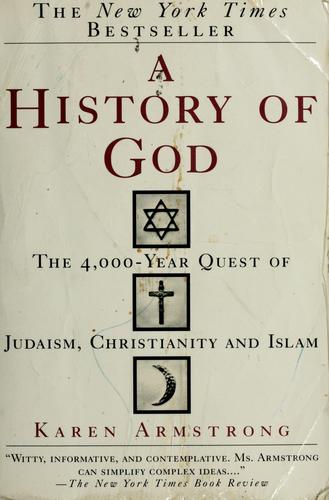
A History of God
Karen Armstrong
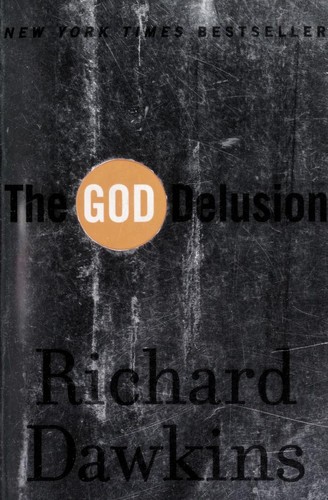
The God Delusion
Richard Dawkins
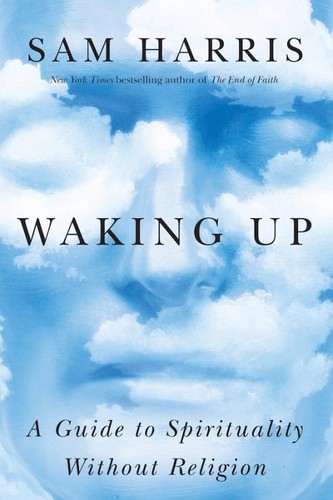
Waking Up: A Guide to Spirituality Without Religion
Sam Harris
The Varieties of Religious Experience
William James
