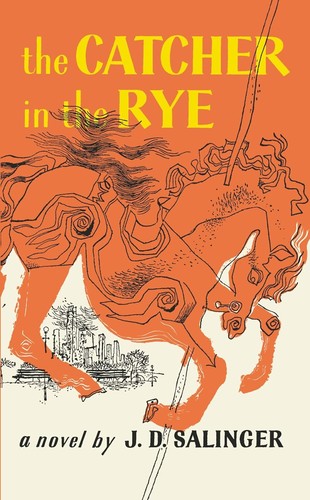
Talk to The Catcher in the Rye like its author wrote you back.
Get the ideas that fit your life — not generic summaries.
- Chat with the book
- Audiobook-style main ideas
- Adapts to your life and goals
- Helps you take action
What it argues
Holden Caulfield has just been expelled from Pencey Prep — his fourth school — and is not ready to go home and tell his parents. So he leaves campus early and spends three days alone in New York City, checking into a hotel, calling old acquaintances, wandering Central Park, and talking to anyone who will listen. He is sixteen, recently bereaved, and becoming increasingly unable to hold himself together. The Catcher in the Rye, published in 1951, is narrated by Holden from some kind of institution where he's been taken to recover. It is one of the most widely read and persistently controversial novels in American literature.
The novel's power comes from its voice. Holden is funny, perceptive, self-contradictory, insufferable, and genuinely suffering — often in the same paragraph. His constant detection of "phoniness" in the adults around him is partly correct and partly a teenager's defense against the more terrifying reality he keeps circling: his younger brother Allie died of leukemia, and Holden cannot process it. Everything he does in New York — the prostitute he calls and then doesn't sleep with, the nuns he gives money to, the carousel in the rain — is the behavior of a person in a grief crisis that nobody around him has noticed.
What it gets right
- 1.
Holden's famous contempt for 'phoniness' is more complicated than it looks: it's partly real cultural criticism and partly the defense mechanism of someone too frightened to be genuinely present in the world.
- 2.
Allie's death is the novel's hidden center. Holden doesn't directly discuss it until late, but almost every scene is shaped by a grief that never got addressed.
- 3.
The catcher in the rye fantasy — Holden standing at the edge of a cliff catching children before they fall off — is a wish to protect innocence, including his own, from an adulthood he sees as corruption.
What it covers
Who wrote it
J. D. Salinger (1919–2010) served in World War II, including at the D-Day landings and through the end of the war, experiences that marked his fiction profoundly. The Catcher in the Rye (1951) was his only novel; he also published a celebrated collection of short stories, Nine Stories, and two volumes of novellas featuring the Glass family — Franny and Zooey and Raise High the Roof Beam, Carpenters. After the late 1960s, Salinger stopped publishing entirely and became famously reclusive in rural New Hampshire, declining interviews and legal action against unauthorized adaptations until his death.
