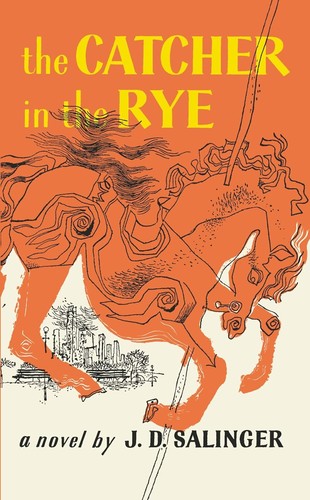
The Catcher in the Rye by J. D. Salinger is a 1951 literary fiction book about adolescent alienation, authenticity and phoniness, grief and loss. Holden's famous contempt for 'phoniness' is more complicated than it looks: it's partly real cultural criticism and partly the defense mechanism of someone too frightened to be genuinely present in the world.
Summary
Holden Caulfield has just been expelled from Pencey Prep — his fourth school — and is not ready to go home and tell his parents. So he leaves campus early and spends three days alone in New York City, checking into a hotel, calling old acquaintances, wandering Central Park, and talking to anyone who will listen. He is sixteen, recently bereaved, and becoming increasingly unable to hold himself together. The Catcher in the Rye, published in 1951, is narrated by Holden from some kind of institution where he's been taken to recover. It is one of the most widely read and persistently controversial novels in American literature.
The novel's power comes from its voice. Holden is funny, perceptive, self-contradictory, insufferable, and genuinely suffering — often in the same paragraph. His constant detection of "phoniness" in the adults around him is partly correct and partly a teenager's defense against the more terrifying reality he keeps circling: his younger brother Allie died of leukemia, and Holden cannot process it. Everything he does in New York — the prostitute he calls and then doesn't sleep with, the nuns he gives money to, the carousel in the rain — is the behavior of a person in a grief crisis that nobody around him has noticed.
Salinger writes in a vernacular American idiom that was new in 1951 and still feels distinct. The prose has a nervous, digressive energy — Holden keeps saying "if you want to know the truth" and "I mean it" and "and all" in ways that reveal he doesn't believe you do and that he's half-convincing himself as he talks. The book is short but dense with the texture of a particular kind of adolescent mind, and rereading it as an adult reveals things about Holden's mental state that first reads don't always catch.
The novel divides readers the way Holden divides people in the book. Teenagers often see themselves in him; adults often find him grating. Some critics think his contempt for phoniness is genuinely incisive; others think it's a teenager's self-serving defense mechanism. Both are right. The novel is most interesting when read as grief memoir rather than adolescent rebellion — Holden is not primarily angry, he's terrified of a world in which Allie can simply die, and the phoniness he despises is partly the world's failure to acknowledge that the ground fell away.
Talk to The Catcher in the Rye like its author wrote you back.
Get the ideas that fit your life — not generic summaries.
- Chat with the book
- Audiobook-style main ideas
- Adapts to your life and goals
- Helps you take action
Key takeaways
- 1.
Holden's famous contempt for 'phoniness' is more complicated than it looks: it's partly real cultural criticism and partly the defense mechanism of someone too frightened to be genuinely present in the world.
- 2.
Allie's death is the novel's hidden center. Holden doesn't directly discuss it until late, but almost every scene is shaped by a grief that never got addressed.
- 3.
The catcher in the rye fantasy — Holden standing at the edge of a cliff catching children before they fall off — is a wish to protect innocence, including his own, from an adulthood he sees as corruption.
- 4.
Phoebe, Holden's younger sister, is the only character who genuinely reaches him. She sees through him without condemning him, and her confrontation at the carousel is the emotional climax of the novel.
- 5.
The novel is narrated from a psychiatric or medical facility, which reframes everything Holden says as retrospective — he's telling this story from after the breakdown. That context changes the tone.
- 6.
Salinger's vernacular voice was genuinely new in 1951 and influenced everything from young adult fiction to first-person confessional writing. The 'if you want to know the truth' rhythm is everywhere now.
- 7.
Holden protects himself by judging everyone, but the things he actually loves — Allie, Phoebe, the ducks in Central Park, James Castle's coat — are small and specific. The contempt and the tenderness coexist.
- 8.
The novel works better read slowly. Fast reading lets Holden's digressive pace feel like avoidance — because it is. The gaps and non sequiturs are where the grief is.
Discussion questions
Use these on your own, with a book club, or as chat starters in Superbook. Book club version, ready to copy or print →
- 1.
Holden calls almost everyone he meets a phony. Is his diagnosis ever accurate? What would 'not phony' look like to him, and does the novel show us anyone who qualifies?
- 2.
Allie's death happened two years before the story's events. Holden never mourns him in any conventional way. How does grief manifest in his behavior across the novel?
- 3.
Holden is narrating from a psychiatric facility. Does knowing that change how you read his account? Is he a reliable narrator?
- 4.
Phoebe is ten and the only person who fully engages with Holden. Why does she reach him when adults don't? What does that say about what Holden actually needs?
- 5.
The catcher fantasy — protecting children from the fall into adulthood — is Holden's own idea of his purpose. Is it heroic, delusional, or something more poignant than either?
- 6.
Holden's response to James Castle, the boy who jumped out of a window rather than take back what he said — is that admiration? Is it a death wish? What is Holden identifying with?
- 7.
The novel has been banned repeatedly, most often for language and sexuality. Does reading it with that history in mind affect what you think it's actually about?
- 8.
First-time teenage readers and adult rereaders often have very different responses to Holden. What accounts for that shift? What do you see now that you might have missed earlier?
- 9.
The ending is deliberately inconclusive — Holden doesn't know what he'll say when school comes around. Does that feel right, or does the novel owe you more resolution?
- 10.
Salinger never allowed Catcher to be adapted into a film. Does that restraint fit the book's themes? What would a film version have to do to not betray it?
- 11.
Is Holden lonely, or is he choosing isolation? Does the novel distinguish between these?
- 12.
The novel is set in 1949 New York. How much of Holden's experience feels specific to that postwar moment, and how much feels universal to a certain kind of adolescent mind?
Themes
Frequently asked questions
-
Why is The Catcher in the Rye considered a classic?
Because Salinger captured the voice of adolescent alienation — perceptive, self-undermining, funny, and genuinely in pain — with a precision that hadn't been done before and hasn't been matched since. It also arrived at a specific postwar American moment and became, for better and worse, the defining novel of teenage dissent.
-
Why is The Catcher in the Rye so controversial?
It was banned for language, sexual content, and what some saw as a sympathetic portrayal of delinquency. It was also associated with several violent incidents, including John Lennon's murder, which Mark David Chapman had with him. The controversy says as much about how Americans respond to alienated youth as about the book itself.
-
Is Holden Caulfield based on Salinger?
Salinger drew on his own wartime experiences and adolescence, but Holden is not autobiography. What's more directly present is the grief: Salinger lost close friends in the war and wrote Holden during the years immediately after.
-
Is The Catcher in the Rye worth rereading as an adult?
Yes, and the experience is quite different from the first read. The grief subtext is more visible, Holden's self-deceptions are more obvious, and Phoebe's role becomes more clearly the emotional center of the book. Many readers find it more affecting at forty than at sixteen.
-
Who shouldn't read The Catcher in the Rye?
Readers who find first-person narrators they'd never want to spend time with in real life are likely to find Holden insufferable — he is insufferable by design. If voice-driven character study without much plot sounds like a bad time, this is not the book for you.