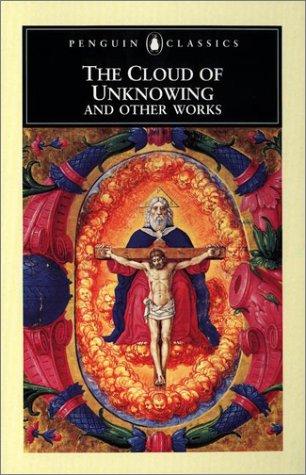
Talk to The Cloud of Unknowing like its author wrote you back.
Get the ideas that fit your life — not generic summaries.
- Chat with the book
- Audiobook-style main ideas
- Adapts to your life and goals
- Helps you take action
What it argues
The Cloud of Unknowing is an anonymous English mystical treatise written in the latter half of the fourteenth century. The author — almost certainly a contemplative priest or monk, writing in the East Midlands dialect of Middle English — addresses the book to a young disciple who has asked for guidance in contemplative prayer. It is one of the finest examples of apophatic mysticism in the English language: the tradition that holds that God cannot be grasped by the intellect but only approached through love, and that the path forward requires letting go of concepts as well as consolations.
The central image is a cloud of unknowing that separates the soul from God — not a cloud of absence but one of incomprehensibility. No matter how much the intellect strives, God remains above and beyond its grasp. The author's instruction is radical: forget everything you know, let it sink into a "cloud of forgetting" beneath you, and direct a "naked intent" — a simple, undivided act of love — toward the cloud above. This is not meditation in the sense of dwelling on ideas about God, but a letting go of all ideas in favor of a direct, wordless orientation.
What it gets right
- 1.
God cannot be known by the intellect. The cloud of unknowing separates the soul from God, and no amount of thinking or reasoning can penetrate it.
- 2.
The only approach to God is through love — a naked, wordless intent directed toward what cannot be grasped conceptually.
- 3.
Everything the intellect produces — thoughts, images, concepts, even good thoughts about God — must be pressed down into the 'cloud of forgetting' beneath the practitioner.
What it covers
Who wrote it
The author of The Cloud of Unknowing is unknown. Internal evidence suggests a fourteenth-century English contemplative, probably a priest or monk writing in the East Midlands dialect, with deep familiarity with the Pseudo-Dionysian tradition and the writings of Richard Rolle and Walter Hilton. The same author is believed to have written The Book of Privy Counselling, The Epistle of Prayer, and translations of Pseudo-Dionysius and Richard of Saint Victor. The anonymity appears deliberate — the author deflects attention from himself throughout — and has become part of the book's reception history.
