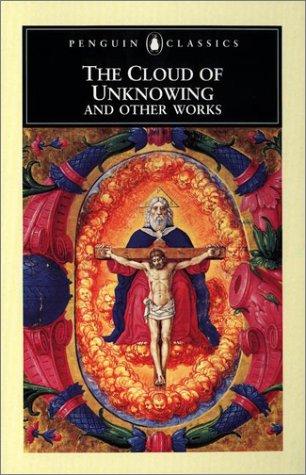
Talk to The Cloud of Unknowing like its author wrote you back.
Get the ideas that fit your life — not generic summaries.
- Chat with the book
- Audiobook-style main ideas
- Adapts to your life and goals
- Helps you take action
The Cloud of Unknowing, in detail
The Cloud of Unknowing is an anonymous English mystical treatise written in the latter half of the fourteenth century. The author — almost certainly a contemplative priest or monk, writing in the East Midlands dialect of Middle English — addresses the book to a young disciple who has asked for guidance in contemplative prayer. It is one of the finest examples of apophatic mysticism in the English language: the tradition that holds that God cannot be grasped by the intellect but only approached through love, and that the path forward requires letting go of concepts as well as consolations.
The central image is a cloud of unknowing that separates the soul from God — not a cloud of absence but one of incomprehensibility. No matter how much the intellect strives, God remains above and beyond its grasp. The author's instruction is radical: forget everything you know, let it sink into a "cloud of forgetting" beneath you, and direct a "naked intent" — a simple, undivided act of love — toward the cloud above. This is not meditation in the sense of dwelling on ideas about God, but a letting go of all ideas in favor of a direct, wordless orientation.
The author is practical and occasionally dry-witted. He warns his reader about the kinds of people who are not ready for this practice, describes the errors beginners make (straining physically, expecting visions, confusing the spiritual with the bodily), and is blunt about the difficulties. He distinguishes between active life, mixed life, and contemplative life, arguing that not everyone is called to what he describes — and that attempting it without proper disposition and guidance is dangerous. He also wrote a companion piece, The Book of Privy Counselling, which extends the teaching for more advanced practitioners.
The Cloud stands in the tradition of Pseudo-Dionysius and draws on a long Christian apophatic lineage, but its English vernacular directness makes it accessible in a way that the Greek and Latin sources are not. It has influenced subsequent mystical theology from John of the Cross to Thomas Merton, and has been read in the twentieth century both by practicing contemplatives and by philosophers interested in the limits of language and concept in religious experience. The translation matters significantly; the William Johnston and Clifton Wolters translations are both well-regarded.
The big ideas
- 1.
God cannot be known by the intellect. The cloud of unknowing separates the soul from God, and no amount of thinking or reasoning can penetrate it.
- 2.
The only approach to God is through love — a naked, wordless intent directed toward what cannot be grasped conceptually.
- 3.
Everything the intellect produces — thoughts, images, concepts, even good thoughts about God — must be pressed down into the 'cloud of forgetting' beneath the practitioner.
