Talk to The Cold War: A New History like its author wrote you back.
Get the ideas that fit your life — not generic summaries.
- Chat with the book
- Audiobook-style main ideas
- Adapts to your life and goals
- Helps you take action
What it argues
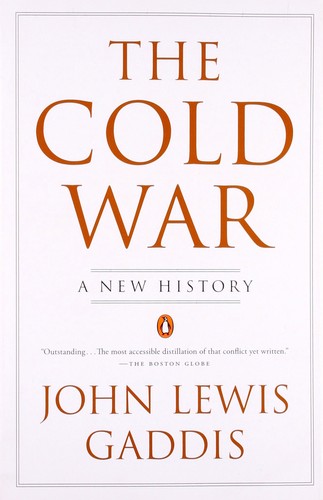
John Lewis Gaddis wrote The Cold War: A New History as a short, synthetic account of the entire superpower conflict, from the end of World War II through the Soviet collapse in 1991. Gaddis is the field's most distinguished American historian, and this book reflects decades of primary research compressed into a readable narrative. It is not an archive-level scholarly work but an interpretive overview that is clear-eyed about what the Cold War was, why it persisted, and why it ended when it did.
Gaddis's central argument is that the Cold War's long peace — no direct military confrontation between the superpowers — was not inevitable. It was maintained by deterrence, by accidents of personality and restraint on both sides, and by the very real fear that nuclear war would be unsurvivable for both societies. The book gives serious weight to individual leaders: Stalin's paranoia, Eisenhower's strategic caution, Kennedy's management of the Cuban Missile Crisis, Reagan's conviction that the Soviet system was internally rotting.
What it gets right
- 1.
The Cold War's long peace depended on nuclear deterrence, but also on the restraint of specific leaders at critical moments — particularly during the Cuban Missile Crisis and the Able Archer 83 scare.
- 2.
Both superpowers were genuinely driven by universalist ideological missions, not just power competition. Understanding the Cold War requires taking those beliefs seriously.
- 3.
Stalin's postwar foreign policy was shaped as much by paranoia and domestic insecurity as by ideological expansionism. The pattern persisted through successive Soviet leaders.
What it covers
Who wrote it
John Lewis Gaddis is a professor of military and naval history at Yale University and the foremost American historian of the Cold War. He is the author of The United States and the Origins of the Cold War, Strategies of Containment, The Long Peace, and the Pulitzer Prize-winning biography George F. Kennan: An American Life. He served as an official historian for the United States Strategic Bombing Survey and has advised multiple administrations on national security history. His work is notable for its synthesis of archival research with accessible, argument-driven prose.
