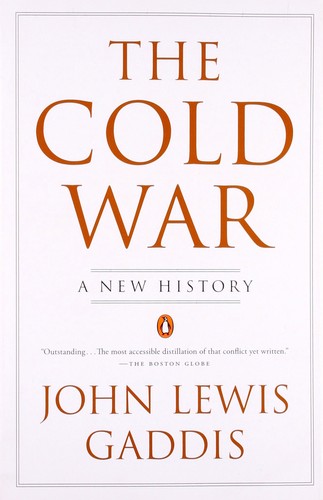
The Cold War: A New History by John Lewis Gaddis is a 2005 history book about cold war, nuclear deterrence, geopolitics. The Cold War's long peace depended on nuclear deterrence, but also on the restraint of specific leaders at critical moments — particularly during the Cuban Missile Crisis and the Able Archer 83 scare.
Summary
John Lewis Gaddis wrote The Cold War: A New History as a short, synthetic account of the entire superpower conflict, from the end of World War II through the Soviet collapse in 1991. Gaddis is the field's most distinguished American historian, and this book reflects decades of primary research compressed into a readable narrative. It is not an archive-level scholarly work but an interpretive overview that is clear-eyed about what the Cold War was, why it persisted, and why it ended when it did.
Gaddis's central argument is that the Cold War's long peace — no direct military confrontation between the superpowers — was not inevitable. It was maintained by deterrence, by accidents of personality and restraint on both sides, and by the very real fear that nuclear war would be unsurvivable for both societies. The book gives serious weight to individual leaders: Stalin's paranoia, Eisenhower's strategic caution, Kennedy's management of the Cuban Missile Crisis, Reagan's conviction that the Soviet system was internally rotting.
The book is also a history of ideology as a geopolitical force. Both superpowers genuinely believed in their own universalist missions. The Soviets wanted to export revolution; the Americans believed in the global spread of liberal democracy. Gaddis takes those convictions seriously rather than reducing the conflict to pure power competition, while still showing how domestic politics and military strategy shaped each side's choices in ways that ideology alone cannot explain.
The final chapters on the Soviet collapse are particularly strong. Gaddis argues that the Cold War ended not because of military pressure or economic competition alone, but because the Soviet system had stopped being able to justify itself ideologically and had hollowed out its own legitimacy. Reagan's role is given credit while avoiding triumphalism. The book ends with a sober assessment of what the Cold War settlement produced and what it left unresolved.
Talk to The Cold War: A New History like its author wrote you back.
Get the ideas that fit your life — not generic summaries.
- Chat with the book
- Audiobook-style main ideas
- Adapts to your life and goals
- Helps you take action
Key takeaways
- 1.
The Cold War's long peace depended on nuclear deterrence, but also on the restraint of specific leaders at critical moments — particularly during the Cuban Missile Crisis and the Able Archer 83 scare.
- 2.
Both superpowers were genuinely driven by universalist ideological missions, not just power competition. Understanding the Cold War requires taking those beliefs seriously.
- 3.
Stalin's postwar foreign policy was shaped as much by paranoia and domestic insecurity as by ideological expansionism. The pattern persisted through successive Soviet leaders.
- 4.
Containment as a doctrine evolved significantly from Kennan's original conception into a military alliance system that Kennan himself came to criticize as a militarization of a fundamentally political problem.
- 5.
The nuclear arms race produced mutual deterrence but also near-accidents and miscommunication that came closer to catastrophe than either government acknowledged publicly.
- 6.
Reagan's belief that the Soviet system would collapse from internal pressure rather than external military confrontation proved more prescient than most policymakers' assessments.
- 7.
The Soviet collapse was not primarily caused by external pressure but by the system's inability to sustain its own ideological legitimacy and its failure to deliver material improvement to its citizens.
- 8.
The end of the Cold War did not resolve the fundamental questions about how a unipolar world should be organized or what role American power should play in it.
Discussion questions
Use these on your own, with a book club, or as chat starters in Superbook. Book club version, ready to copy or print →
- 1.
Gaddis argues that individual leaders mattered enormously to Cold War outcomes. Can you think of moments where a different personality in power would have led to a very different result?
- 2.
The book takes seriously the ideological convictions of both sides. Does that change how you think about the conflict compared to a purely strategic or material explanation?
- 3.
Containment was designed by Kennan as primarily political and economic. How did it become primarily military, and what were the consequences of that shift?
- 4.
Gaddis gives Reagan significant credit for the Soviet collapse. Do you find that persuasive, or does it overestimate the role of American policy?
- 5.
The Cuban Missile Crisis is presented as extremely dangerous, more so than either government admitted at the time. Does knowing how close it came change how you think about nuclear deterrence as a stable strategy?
- 6.
Both superpowers believed in universal missions. How does that shape the way Gaddis tells the story of the conflict compared to a purely realist account?
- 7.
The Soviet collapse came faster than almost anyone predicted. What does that suggest about the limits of intelligence and strategic forecasting?
- 8.
Gaddis ends without triumphalism about the American victory. What unresolved questions does he leave, and do they seem more or less urgent today?
- 9.
How does reading a short synthetic history like this compare to a detailed study of a single episode? What do you gain and lose from each approach?
- 10.
Gaddis suggests the Cold War's long peace was partly luck. How much does that conclusion unsettle your confidence in deterrence as a stable mechanism for preventing nuclear war?
- 11.
Which aspect of Cold War history that Gaddis covers did you know least about before reading, and what surprised you most?
- 12.
The Cold War shaped the global order we still live in. Which legacy of it do you think matters most for understanding current geopolitics?
Themes
Frequently asked questions
-
Is The Cold War: A New History a good introduction to the subject?
Yes. It is specifically designed as a concise synthesis for general readers. The 333-page book covers the entire conflict from 1945 to 1991 in a narrative that is clear and well organized. Readers who want deeper treatment of specific episodes will want supplementary reading, but this is among the best single-volume introductions available.
-
How long does it take to read The Cold War: A New History?
About five to six hours at average reading pace. Gaddis writes with unusual clarity for a historian of his stature, and the chapters are organized chronologically with clear argument threads running through each.
-
What is Gaddis's main argument about why the Cold War ended?
That the Soviet system collapsed primarily due to internal ideological and economic failure rather than external military pressure. Reagan gets credit for recognizing and accelerating that dynamic, but Gaddis resists attributing the outcome solely to American policy.
-
How does this book differ from Gaddis's more scholarly work?
It is an interpretive synthesis rather than an archival study. Gaddis draws on his decades of primary research but writes here for a broad audience, making arguments and telling stories rather than exhaustively documenting sources. Readers who want the full scholarly apparatus should read Strategies of Containment alongside it.
-
Who should read The Cold War: A New History?
Anyone who wants a reliable, well-argued overview of the entire Cold War from its most distinguished American historian. It works especially well for readers whose knowledge is patchy across different periods of the conflict.
Similar books
The Spy and the Traitor: The Greatest Espionage Story of the Cold War
Ben Macintyre
The Anatomy of Fascism
Robert O. Paxton
The Rise and Fall of the Third Reich
William L. Shirer
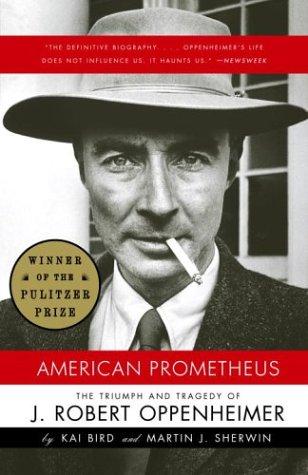
American Prometheus
Kai Bird and Martin J. Sherwin
