Talk to The Cold War: A New History like its author wrote you back.
Get the ideas that fit your life — not generic summaries.
- Chat with the book
- Audiobook-style main ideas
- Adapts to your life and goals
- Helps you take action
The Cold War: A New History, in detail
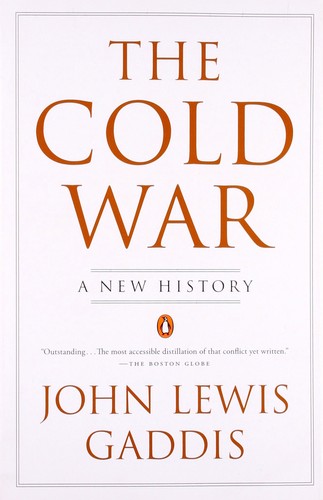
John Lewis Gaddis wrote The Cold War: A New History as a short, synthetic account of the entire superpower conflict, from the end of World War II through the Soviet collapse in 1991. Gaddis is the field's most distinguished American historian, and this book reflects decades of primary research compressed into a readable narrative. It is not an archive-level scholarly work but an interpretive overview that is clear-eyed about what the Cold War was, why it persisted, and why it ended when it did.
Gaddis's central argument is that the Cold War's long peace — no direct military confrontation between the superpowers — was not inevitable. It was maintained by deterrence, by accidents of personality and restraint on both sides, and by the very real fear that nuclear war would be unsurvivable for both societies. The book gives serious weight to individual leaders: Stalin's paranoia, Eisenhower's strategic caution, Kennedy's management of the Cuban Missile Crisis, Reagan's conviction that the Soviet system was internally rotting.
The book is also a history of ideology as a geopolitical force. Both superpowers genuinely believed in their own universalist missions. The Soviets wanted to export revolution; the Americans believed in the global spread of liberal democracy. Gaddis takes those convictions seriously rather than reducing the conflict to pure power competition, while still showing how domestic politics and military strategy shaped each side's choices in ways that ideology alone cannot explain.
The final chapters on the Soviet collapse are particularly strong. Gaddis argues that the Cold War ended not because of military pressure or economic competition alone, but because the Soviet system had stopped being able to justify itself ideologically and had hollowed out its own legitimacy. Reagan's role is given credit while avoiding triumphalism. The book ends with a sober assessment of what the Cold War settlement produced and what it left unresolved.
The big ideas
- 1.
The Cold War's long peace depended on nuclear deterrence, but also on the restraint of specific leaders at critical moments — particularly during the Cuban Missile Crisis and the Able Archer 83 scare.
- 2.
Both superpowers were genuinely driven by universalist ideological missions, not just power competition. Understanding the Cold War requires taking those beliefs seriously.
- 3.
Stalin's postwar foreign policy was shaped as much by paranoia and domestic insecurity as by ideological expansionism. The pattern persisted through successive Soviet leaders.
