History · Book club
The Color Purple book club questions
Here are 12 book club questions for The Color Purple by Alice Walker, ordered to open easily and end somewhere worth arguing about. Copy them, print them, or bring them up one at a time.
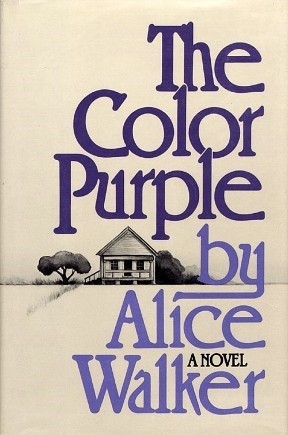
The Color Purple is Alice Walker's epistolary novel set in rural Georgia in the 1930s, told almost entirely through the letters of Celie, a Black woman who has survived sexual abuse, forced marriage, and the theft of her children.
Alice Walker · 1982 · 4h 40m
Full summary and key takeaways →The 12 questions
- 1.
Celie addresses her early letters to God rather than to a person. What does that choice tell us about her isolation, and what changes when she begins addressing them to Nettie?
- 2.
Mister is never named in the novel. What effect does that decision have on how you read him? Does withholding his name feel like punishment, erasure, or something else?
- 3.
Shug Avery occupies a complicated position — she is the instrument of Celie's liberation but also complicit for years in the household's dynamics. How do you hold those two truths about her?
- 4.
Walker's depiction of Black men in the novel was controversial among Black critics in the 1980s. How do you think about the tension between authentic storytelling and the representational burdens placed on minority writers?
- 5.
The parallel structure of Nettie's African letters and Celie's Georgia letters suggests a comparison between American racism and colonialism. Does that comparison feel illuminating or strained?
- 6.
The novel uses Black vernacular English throughout. Did you find Celie's voice difficult to enter? What happened once you did?
- 7.
Shug's theology argues that God wants you to notice and appreciate things, not to suffer. How does that view of divinity function in the novel's larger argument about what Celie deserves?
- 8.
Celie's recovery is gradual, nonlinear, and incomplete but real. How does Walker balance honesty about the damage of trauma with a story that ends in something like healing?
- 9.
The Color Purple was adapted into a successful film by Steven Spielberg and later a Broadway musical. Do you think those adaptations change how readers experience the book now?
- 10.
Walker said in interviews that she received the novel, as if the characters spoke to her and she transcribed. What does that account of creative process suggest about the book's relationship to testimony versus fiction?
- 11.
If you had read this book at sixteen and are reading it now, or vice versa, what do you think you would understand differently at different ages?
- 12.
The novel ends with reunion and a degree of resolution. Is that ending earned by the preceding darkness, or does it feel like a concession to the reader's desire for comfort?
How to run the discussion
- Pick six to eight, not all of them. An hour of real discussion covers fewer questions than anyone expects, and racing the list is what makes a book club feel like homework.
- Open with what people noticed, not what they concluded. Asking for a verdict first hardens opinions before anyone has heard each other.
- Let the disagreement run. The questions below that split a room are the ones worth the time; the ones everyone answers the same way can be skipped.
- Ask the quiet person a specific question. A direct, narrow question is far easier to answer than an open invitation to contribute.
Themes worth steering toward
If the conversation stalls, these are the threads that usually restart it.
Common questions
What are good book club questions for The Color Purple?
Here are 12 book club questions for The Color Purple by Alice Walker, ordered to open easily and end somewhere worth arguing about. The strongest openers ask what each reader noticed rather than what they concluded, and the discussion usually turns on race and racism, gender and identity, resilience.
How long should a book club discussion of The Color Purple last?
Most groups run 60 to 90 minutes of actual discussion. That is roughly six to eight questions, not all of them, so pick the ones that suit your group rather than working down the list in order.
What are the main themes in The Color Purple?
Race and racism, Gender and identity, Resilience, Love and community, Voice and self-expression. Those are the threads most likely to divide a room, which makes them the useful places to steer a discussion that has gone quiet.
Picking the next one? See books like The Color Purple or questions for other book club picks.
