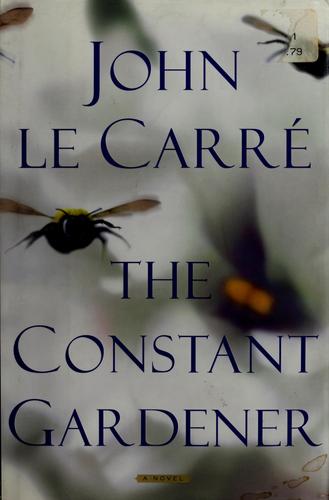
Talk to The Constant Gardener like its author wrote you back.
Get the ideas that fit your life — not generic summaries.
- Chat with the book
- Audiobook-style main ideas
- Adapts to your life and goals
- Helps you take action
What it argues
Justin Quayle is a mild, reserved British diplomat stationed in Kenya. When his wife Tessa is found murdered in a remote corner of the country, Justin — a man whose entire professional identity is built on not making a fuss — begins to investigate what she died for. Tessa was a human rights activist with a particular interest in a pharmaceutical company's drug trials on impoverished Africans. Justin gradually understands that she was not simply killed; she was erased.
The novel is told in a structure that moves back and forth in time, so that what Justin learns about Tessa's death also becomes what we learn about their marriage — a marriage Justin understood less well than he thought. Le Carré is doing two things simultaneously: writing a political thriller about pharmaceutical corruption in Africa, and writing a love story about a man who falls in love with his wife posthumously. Neither thread can be cleanly separated from the other. Justin's transformation from passive bystander to active witness is the novel's emotional spine.
What it gets right
- 1.
Tessa Quayle is the moral center of the novel even in death — her investigation shapes everything Justin discovers, and her absence is what teaches him to be present.
- 2.
Le Carré argues that pharmaceutical companies conducting trials in poor countries and British diplomats who look away are part of the same system of exploitation.
- 3.
Justin's transformation is not heroic in any conventional sense — he is a mild man who simply refuses, finally, to stop looking.
What it covers
Who wrote it
John le Carré (1931–2020), born David John Moore Cornwell, worked for MI5 and MI6 before leaving to write full time after the success of The Spy Who Came in from the Cold in 1963. He is the author of more than twenty novels, including the Smiley trilogy, The Night Manager, The Constant Gardener, and A Most Wanted Man. His fiction reshaped the espionage genre by treating intelligence work as morally ambiguous rather than heroic. He was shortlisted for the Man Booker Prize and received the Goethe Medal and the Olof Palme Prize.
