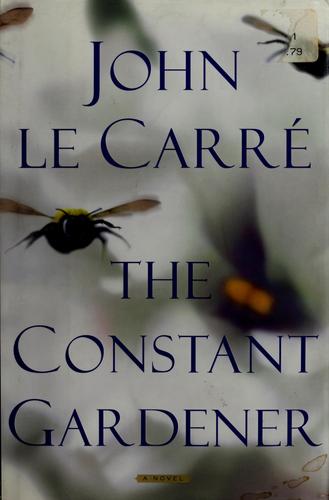
The Constant Gardener by John le Carré is a 2001 thriller book about corporate corruption, grief and love, african exploitation. Tessa Quayle is the moral center of the novel even in death — her investigation shapes everything Justin discovers, and her absence is what teaches him to be present.
Summary
Justin Quayle is a mild, reserved British diplomat stationed in Kenya. When his wife Tessa is found murdered in a remote corner of the country, Justin — a man whose entire professional identity is built on not making a fuss — begins to investigate what she died for. Tessa was a human rights activist with a particular interest in a pharmaceutical company's drug trials on impoverished Africans. Justin gradually understands that she was not simply killed; she was erased.
The novel is told in a structure that moves back and forth in time, so that what Justin learns about Tessa's death also becomes what we learn about their marriage — a marriage Justin understood less well than he thought. Le Carré is doing two things simultaneously: writing a political thriller about pharmaceutical corruption in Africa, and writing a love story about a man who falls in love with his wife posthumously. Neither thread can be cleanly separated from the other. Justin's transformation from passive bystander to active witness is the novel's emotional spine.
Le Carré's research into the pharmaceutical industry in the late 1990s is visible on every page. The novel is openly polemical — he wrote it partly in response to drug trials conducted in Africa that he considered exploitative — and unlike in his Cold War fiction, the moral lines are clearer here. The corporation is the villain, the British government is its enabler, and the Africans are the victims. The clarity is both a strength and a limitation: the argument is hard to dispute but the complexity of earlier le Carré is somewhat lost.
Readers who loved the moral ambiguity of Tinker, Tailor will find The Constant Gardener more conventional in its politics, but more emotionally open. The love story is genuinely moving, and Fernando Meirelles's 2005 film adaptation — which won Rachel Weisz an Oscar — is one of the best films made from a le Carré novel. Start here if you want le Carré at his most humane; go to the Smiley novels if you want him at his most unsettling.
Talk to The Constant Gardener like its author wrote you back.
Get the ideas that fit your life — not generic summaries.
- Chat with the book
- Audiobook-style main ideas
- Adapts to your life and goals
- Helps you take action
Key takeaways
- 1.
Tessa Quayle is the moral center of the novel even in death — her investigation shapes everything Justin discovers, and her absence is what teaches him to be present.
- 2.
Le Carré argues that pharmaceutical companies conducting trials in poor countries and British diplomats who look away are part of the same system of exploitation.
- 3.
Justin's transformation is not heroic in any conventional sense — he is a mild man who simply refuses, finally, to stop looking.
- 4.
The novel is constructed as a series of retroactive discoveries: what Justin learns about the plot and what he learns about his marriage arrive together, each illuminating the other.
- 5.
Africa in this novel is not merely a backdrop — le Carré shows Nairobi and the rural north in enough specificity to feel real rather than symbolic.
- 6.
The institutional silence of the British Foreign Office is treated as a form of active harm — diplomacy as the art of looking the other way.
- 7.
The love story is the novel's most unexpected element. Le Carré, known for cold irony, writes Justin's grief with real emotional generosity.
- 8.
The pharmaceutical villain is less morally interesting than the Cold War enemy precisely because it is more obviously corrupt — clarity costs complexity.
Discussion questions
Use these on your own, with a book club, or as chat starters in Superbook. Book club version, ready to copy or print →
- 1.
Justin is defined by passivity for the first half of the novel. What changes him, and do you find that transformation credible?
- 2.
Tessa's activism is portrayed sympathetically, but she kept significant secrets from Justin. How do you weigh her honesty against her methods?
- 3.
The novel treats the British diplomatic corps as complicit in pharmaceutical exploitation. Is that indictment fair, or is le Carré too quick to assign collective guilt?
- 4.
Le Carré's earlier fiction is famously morally ambiguous. This novel is more polemical — the corporation is clearly the villain. Does the clarity weaken or strengthen the book?
- 5.
Justin's willingness to die for the truth he has uncovered is framed as love rather than heroism. Does that reframing hold up?
- 6.
How does Africa function in this novel — as a place, as a symbol, or as both? Does le Carré represent it with enough specificity to avoid making it simply a setting for a Western moral drama?
- 7.
The pharmaceutical industry trials depicted in this novel are based on real events. Does knowing that change how you read the fiction?
- 8.
Sandy Woodrow, Justin's colleague, is a man who chooses comfort over conscience. Is he a villain or just a recognizable human type?
- 9.
The British government's role in the cover-up is shown as mostly passive — silence and obstruction rather than active conspiracy. Is that a more damning portrait than direct villainy?
- 10.
How does this compare to le Carré's Cold War novels in terms of what it asks of the reader? What does it gain and what does it lose?
- 11.
The title refers to Justin's hobby. By the end, what has the gardening imagery accumulated to mean?
- 12.
The 2005 film adaptation won Rachel Weisz an Oscar. If you've seen it: what did the film get right and what did it sacrifice?
Themes
Frequently asked questions
-
Is The Constant Gardener worth reading?
Yes, particularly if you're interested in the politics of pharmaceutical industry behavior in developing countries, or in le Carré at his most emotionally engaged. It's a love story as much as a thriller, and both threads are strong.
-
Do I need to read other le Carré novels first?
No. This is a standalone novel with no connections to the Smiley books or any other le Carré series.
-
Is the film good?
The 2005 film directed by Fernando Meirelles and starring Ralph Fiennes and Rachel Weisz is excellent — arguably better at conveying the African setting than the novel. Weisz won the Academy Award for Best Supporting Actress. Worth watching alongside the book.
-
How does this compare to the Smiley novels?
It's more emotionally accessible and more overtly political. The Smiley novels are colder and more morally ambiguous; this one has clearer heroes and villains. If you find Tinker, Tailor too opaque, start here.
-
Who shouldn't read this book?
Readers who want the layered ambiguity of le Carré's Cold War fiction may find this too straightforward in its targets. And at 500 pages it's significantly longer than The Spy Who Came in from the Cold — those who want le Carré compressed should start there.
Similar books
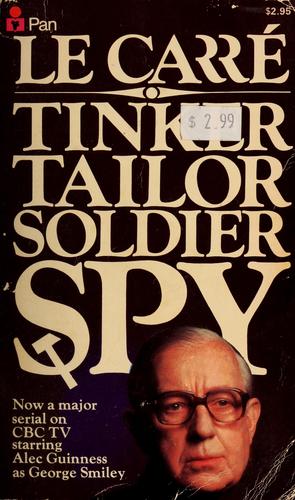
Tinker, Tailor, Soldier, Spy
John le Carré
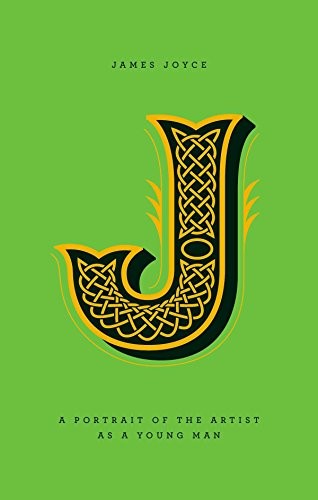
The Spy Who Came in from the Cold
John le Carré
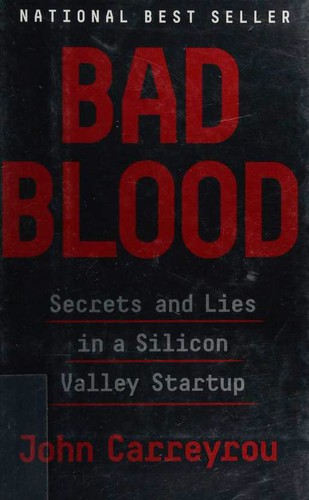
Bad Blood: Secrets and Lies in a Silicon Valley Startup
John Carreyrou
The Spy and the Traitor: The Greatest Espionage Story of the Cold War
Ben Macintyre
