Philosophy · Book club
The Courage to Be Disliked book club questions
Here are 12 book club questions for The Courage to Be Disliked by Ichiro Kishimi & Fumitake Koga, ordered to open easily and end somewhere worth arguing about. Copy them, print them, or bring them up one at a time.
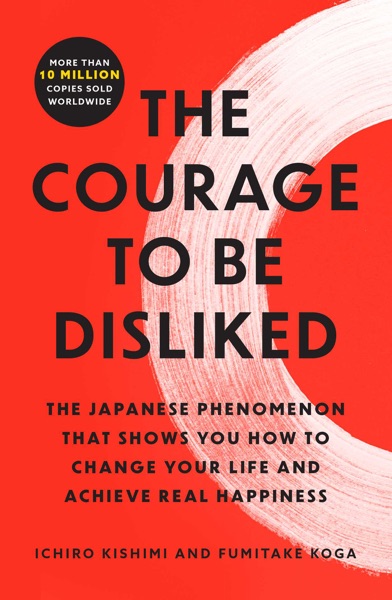
The Courage to Be Disliked presents Alfred Adler's philosophy of individual psychology through a Socratic dialogue between a young man and a philosopher.
Ichiro Kishimi & Fumitake Koga · 2013 · 4h 30m
Full summary and key takeaways →The 12 questions
- 1.
The philosopher claims we choose our emotions rather than being controlled by them. Where in your own life does that feel true, and where does it feel like an overreach?
- 2.
Adler's 'separation of tasks' says that whether someone dislikes you is their problem, not yours. How would your daily behavior shift if you actually operated this way?
- 3.
The book argues that trauma does not determine outcomes — only our interpretation of past events does. Is there a story you tell yourself about your past that might be serving a current purpose rather than simply reflecting reality?
- 4.
What recognition are you currently seeking, and from whom? What would you do differently if that recognition were irrelevant?
- 5.
Adler believes all problems are interpersonal problems. Think of a persistent personal problem — does framing it as a relationship problem change how you see it?
- 6.
The philosopher distinguishes between being liked and having community feeling. In your own relationships, which are you more often chasing?
- 7.
Self-acceptance includes accepting your flaws without trying to excuse them. Which of your flaws do you find hardest to simply accept?
- 8.
The young man's resistance in the dialogue often reflects the reader's own skepticism. Which of his objections did you find yourself most agreeing with?
- 9.
The book treats happiness as something chosen in the present rather than achieved in the future. What would it mean for you to choose happiness today, not later?
- 10.
Lifestyle, in Adler's terms, is the worldview you've constructed. What does your lifestyle say about the conclusions you've drawn about yourself and others?
- 11.
The dialogue format slows the argument down considerably. Did that structure change how you engaged with the ideas, or did it frustrate you?
- 12.
If someone close to you keeps doing something destructive, Adler would say intervening in their behavior is overstepping their tasks. How far does that principle go in practice?
How to run the discussion
- Pick six to eight, not all of them. An hour of real discussion covers fewer questions than anyone expects, and racing the list is what makes a book club feel like homework.
- Open with what people noticed, not what they concluded. Asking for a verdict first hardens opinions before anyone has heard each other.
- Let the disagreement run. The questions below that split a room are the ones worth the time; the ones everyone answers the same way can be skipped.
- Ask the quiet person a specific question. A direct, narrow question is far easier to answer than an open invitation to contribute.
Themes worth steering toward
If the conversation stalls, these are the threads that usually restart it.
Common questions
What are good book club questions for The Courage to Be Disliked?
Here are 12 book club questions for The Courage to Be Disliked by Ichiro Kishimi & Fumitake Koga, ordered to open easily and end somewhere worth arguing about. The strongest openers ask what each reader noticed rather than what they concluded, and the discussion usually turns on self-acceptance, freedom, adlerian psychology.
How long should a book club discussion of The Courage to Be Disliked last?
Most groups run 60 to 90 minutes of actual discussion. That is roughly six to eight questions, not all of them, so pick the ones that suit your group rather than working down the list in order.
What are the main themes in The Courage to Be Disliked?
Self-acceptance, Freedom, Adlerian psychology, Interpersonal relationships, Happiness. Those are the threads most likely to divide a room, which makes them the useful places to steer a discussion that has gone quiet.
Picking the next one? See books like The Courage to Be Disliked or questions for other book club picks.
