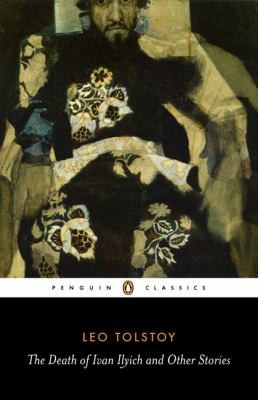
Talk to The Death of Ivan Ilyich like its author wrote you back.
Get the ideas that fit your life — not generic summaries.
- Chat with the book
- Audiobook-style main ideas
- Adapts to your life and goals
- Helps you take action
What it argues
Ivan Ilyich Golovin is a respectable judge who has lived a decent, conventional, socially approved life — not bad, not good, simply correct. Then, at the peak of his career, he falls ill. The novella traces his dying across roughly three months: the initial denial, the slow horror as illness strips away his professional identity, the isolation of being around people who cannot acknowledge what is happening, and finally — in its last pages — a transformation that Tolstoy refuses to make easy or sentimental.
What the novella is actually about is the distance between living as one ought to (by society's lights) and living as one actually feels called to live. Ivan Ilyich has not done anything obviously wrong. He has been pleasant, industrious, respectable. The indictment is precisely that this was enough for him — that he never questioned whether the life he built was genuinely his. The dying forces that question at the worst possible time, and the novel is Tolstoy's concentrated argument that dying honestly is only possible if you have lived honestly.
What it gets right
- 1.
A life organized around social approval rather than authentic feeling is not really a life — and dying makes that impossible to ignore any longer.
- 2.
The people around the dying person are often more frightened by death than the dying person is, and their false cheer is a form of abandonment.
- 3.
Gerasim's simple, unembarrassed compassion — he sees what is happening and does not pretend otherwise — is Tolstoy's ideal of human decency in the face of suffering.
What it covers
Who wrote it
Leo Tolstoy (1828–1910) was a Russian novelist, moral philosopher, and social reformer, widely regarded as one of the greatest writers in any language. Born into Russian nobility, he served in the Crimean War before turning to literature. His two most celebrated novels, War and Peace (1869) and Anna Karenina (1877), established him as a master of psychological realism. The Death of Ivan Ilyich (1886) was written after his religious conversion and reflects his later philosophy that authentic moral life requires rejecting the values of polite society. He also wrote the novella Hadji Murat and the play The Power of Darkness.
