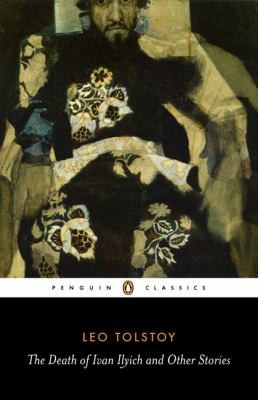
The Death of Ivan Ilyich by Leo Tolstoy is a 1886 literary fiction book about mortality and denial, authentic versus conventional life, compassion. A life organized around social approval rather than authentic feeling is not really a life — and dying makes that impossible to ignore any longer.
Summary
Ivan Ilyich Golovin is a respectable judge who has lived a decent, conventional, socially approved life — not bad, not good, simply correct. Then, at the peak of his career, he falls ill. The novella traces his dying across roughly three months: the initial denial, the slow horror as illness strips away his professional identity, the isolation of being around people who cannot acknowledge what is happening, and finally — in its last pages — a transformation that Tolstoy refuses to make easy or sentimental.
What the novella is actually about is the distance between living as one ought to (by society's lights) and living as one actually feels called to live. Ivan Ilyich has not done anything obviously wrong. He has been pleasant, industrious, respectable. The indictment is precisely that this was enough for him — that he never questioned whether the life he built was genuinely his. The dying forces that question at the worst possible time, and the novel is Tolstoy's concentrated argument that dying honestly is only possible if you have lived honestly.
The prose is deceptively plain. Tolstoy strips out ornament and lets the emotional logic accumulate with almost clinical precision. The peasant servant Gerasim — who alone among the household members acknowledges Ivan's dying without false cheer, and who physically supports Ivan's legs in the one position that relieves his pain — is only in a handful of scenes, but he does more structural work than almost any character in the book. His uncomplicated compassion is the novel's answer.
At ninety pages, The Death of Ivan Ilyich is the easiest entry point into Tolstoy, and possibly the most efficient. You will either find it a devastating moral reckoning or a slightly cold moral lecture, depending on where you are in life. Readers who have lost someone, or who have spent time in hospital rooms watching someone die, often find this the most accurate piece of literature about that experience. Younger readers sometimes find it distant. It bears rereading.
Talk to The Death of Ivan Ilyich like its author wrote you back.
Get the ideas that fit your life — not generic summaries.
- Chat with the book
- Audiobook-style main ideas
- Adapts to your life and goals
- Helps you take action
Key takeaways
- 1.
A life organized around social approval rather than authentic feeling is not really a life — and dying makes that impossible to ignore any longer.
- 2.
The people around the dying person are often more frightened by death than the dying person is, and their false cheer is a form of abandonment.
- 3.
Gerasim's simple, unembarrassed compassion — he sees what is happening and does not pretend otherwise — is Tolstoy's ideal of human decency in the face of suffering.
- 4.
Ivan's final terror is not death itself but the fear that his whole life was wrong. The release he experiences in the last pages comes from accepting that it was, and that it no longer matters.
- 5.
Tolstoy presents pain as both physical and existential: the physical pain is almost the easier part, because it is at least real, while the social isolation of dying has no relief.
- 6.
The novella is relentless about how institutions — professional, domestic, social — fail individuals at the moment of their greatest need.
- 7.
Gerasim is a peasant, not an aristocrat, and this is not accidental: Tolstoy's later work consistently placed authentic moral life closer to the peasantry than the educated classes.
Discussion questions
Use these on your own, with a book club, or as chat starters in Superbook. Book club version, ready to copy or print →
- 1.
Ivan has not done anything obviously wrong. Does that make Tolstoy's indictment of his life feel just, or does it feel unfair?
- 2.
Gerasim is the only person who helps Ivan honestly. Is his goodness innate, or does Tolstoy suggest it comes from his peasant life being less corrupted by social performance?
- 3.
The novel ends with Ivan experiencing something like light and peace in his final moments. Is this a genuine spiritual transformation, or does Tolstoy earn that ending?
- 4.
Ivan's wife and colleagues are not cruel — they are simply doing what their world requires. Does the novella hold them responsible, or is the social system itself on trial?
- 5.
Which relationship in your own life most resembles the false-cheer relationship Ivan has with his family during his illness?
- 6.
The novella opens with Ivan already dead, seen through his colleagues' reactions. Why does Tolstoy start there rather than at the beginning of Ivan's life?
- 7.
Tolstoy wrote this novella after his own religious conversion in the late 1870s. Does the religious subtext feel organic to the story, or does it feel imposed on it?
- 8.
At the end, Ivan realizes his fear of death has disappeared. Is this because he has accepted that his life was wrong, or because the love he briefly feels from his son dissolves it?
- 9.
The novella is only ninety pages. Does its brevity feel like economy, or does it feel like Tolstoy has cut something important?
- 10.
What would Ivan's life have looked like if he had lived authentically? The novella critiques his life but never fully shows us the alternative.
- 11.
How does this novella compare with other accounts of dying you've read — When Breath Becomes Air, Being Mortal, A Grief Observed? What does fiction do that memoir cannot?
Themes
Frequently asked questions
-
How long does it take to read The Death of Ivan Ilyich?
About ninety minutes to two hours. It is one of the shortest major works in the Western literary canon — closer to a long short story than a novel. Most readers finish it in a single sitting.
-
Is The Death of Ivan Ilyich depressing?
It is serious and unsparing, but not purely depressing. The last pages move toward something like release, and most readers finish it feeling more clarified than crushed. That said, it is not a comfortable read — it is designed to make you examine your own life.
-
What is the point of the Gerasim character?
Gerasim is the only person in the novel who relates to Ivan without pretense or self-interest. He is Tolstoy's model of natural human decency — simple, uncorrupted, able to acknowledge reality without flinching. His presence throws everyone else's false cheer into relief.
-
Is this a good introduction to Tolstoy?
Possibly the best. It shows everything essential about Tolstoy's moral vision and psychological precision in ninety pages. Readers who connect with it almost always go on to Anna Karenina and eventually War and Peace.
-
Who shouldn't read this novella?
Readers in the middle of grief, or who are currently caring for someone dying, may find it too close to tolerate. The emotional accuracy is the point, but that same accuracy can be overwhelming if you are living it.
Similar books
When Breath Becomes Air
Paul Kalanithi
Being Mortal: Medicine and What Matters in the End
Atul Gawande
The Year of Magical Thinking
Joan Didion
Man's Search for Meaning
Viktor E. Frankl
