Memoir · Book club
The Diving Bell and the Butterfly book club questions
Here are 11 book club questions for The Diving Bell and the Butterfly by Jean-Dominique Bauby, ordered to open easily and end somewhere worth arguing about. Copy them, print them, or bring them up one at a time.
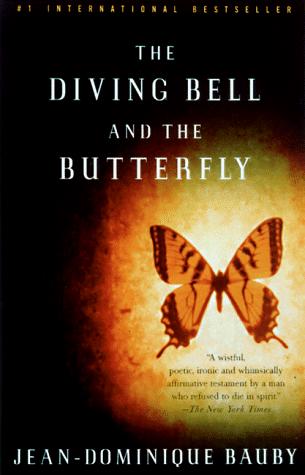
Jean-Dominique Bauby was the editor-in-chief of French Elle when he suffered a massive stroke in December 1995 that left him with complete paralysis of his body except for his left eyelid.
Jean-Dominique Bauby · 1997 · 1h 45m
Full summary and key takeaways →The 11 questions
- 1.
Bauby distinguishes between the diving bell and the butterfly — the immobile body and the roaming mind. Which passages feel most like one and which feel like the other?
- 2.
The book was composed by blinking. Does knowing that change how you read individual sentences? Does it make you more or less aware of language as physical work?
- 3.
Bauby describes his hospital world with precision but not despair. What do you make of that tone — does it feel earned or managed?
- 4.
Memory occupies much of the book. Which of his recollections did you find most vivid, and what does the choice of what to remember suggest about what mattered to him?
- 5.
How does Bauby's identity as an editor and taste-maker — someone whose work was about judgment and style — shape the kind of memoir he wrote?
- 6.
The book is very short. Does the brevity feel appropriate to the subject, or does it leave you wanting more? What does the length say about what Bauby chose to include?
- 7.
Several people in the book are described only once. What does it mean to be the subject of a paragraph written by someone who cannot speak or move?
- 8.
Bauby's children visit. How does he write about them, and what does that section say about the kind of father he had been and hoped to be?
- 9.
The title images — diving bell and butterfly — appear only implicitly in the text. What do they mean to you after reading?
- 10.
What does the book suggest about the relationship between physical sensation and consciousness? Is there a self without a body, in Bauby's account?
- 11.
If you had to describe this book to someone who had never heard of it, in one sentence, what would you say it was about?
How to run the discussion
- Pick six to eight, not all of them. An hour of real discussion covers fewer questions than anyone expects, and racing the list is what makes a book club feel like homework.
- Open with what people noticed, not what they concluded. Asking for a verdict first hardens opinions before anyone has heard each other.
- Let the disagreement run. The questions below that split a room are the ones worth the time; the ones everyone answers the same way can be skipped.
- Ask the quiet person a specific question. A direct, narrow question is far easier to answer than an open invitation to contribute.
Themes worth steering toward
If the conversation stalls, these are the threads that usually restart it.
Common questions
What are good book club questions for The Diving Bell and the Butterfly?
Here are 11 book club questions for The Diving Bell and the Butterfly by Jean-Dominique Bauby, ordered to open easily and end somewhere worth arguing about. The strongest openers ask what each reader noticed rather than what they concluded, and the discussion usually turns on disability, consciousness, memory.
How long should a book club discussion of The Diving Bell and the Butterfly last?
Most groups run 60 to 90 minutes of actual discussion. That is roughly six to eight questions, not all of them, so pick the ones that suit your group rather than working down the list in order.
What are the main themes in The Diving Bell and the Butterfly?
Disability, Consciousness, Memory, Resilience, Language. Those are the threads most likely to divide a room, which makes them the useful places to steer a discussion that has gone quiet.
Picking the next one? See books like The Diving Bell and the Butterfly or questions for other book club picks.
