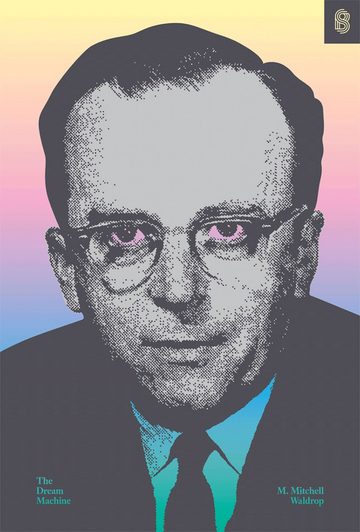
Talk to The Dream Machine: J.C.R. Licklider and the Revolution That Made Computing Personal like its author wrote you back.
Get the ideas that fit your life — not generic summaries.
- Chat with the book
- Audiobook-style main ideas
- Adapts to your life and goals
- Helps you take action
What it argues
The Dream Machine is a biography of J.C.R. Licklider, the psychologist and computer scientist who, more than anyone else, articulated the vision of interactive personal computing decades before it existed and then funded the research that made it possible. Licklider is not famous. He did not found a company or invent a product. He spent his career inside institutions — MIT, BBN, DARPA, and back — funding other people's work. But the research he supported and the vision he propagated can be traced in a direct line to the internet, the graphical user interface, and the networked personal computer.
Waldrop tells the story through an unusually well-structured biography that interleaves Licklider's personal and professional history with the broader history of computing from the 1940s through the 1980s. The result is one of the clearest accounts available of how ARPANET — the precursor to the internet — came to exist, and why it looked the way it did rather than looking like the centralized time-sharing systems that most people in the 1960s assumed would be the future of computing.
What it gets right
- 1.
Licklider's 'Man-Computer Symbiosis' (1960) argued for interactive computing as the productive mode — not calculation or batch processing but a real-time collaboration between human judgment and machine speed.
- 2.
Licklider's power was institutional and financial: as head of ARPA's Information Processing Techniques Office, he funded the research culture that produced the internet, the graphical user interface, and interactive computing.
- 3.
ARPANET, the internet's precursor, was designed to connect researchers at different institutions and was shaped by Licklider's vision of a distributed network of communities rather than a centralized system.
What it covers
Who wrote it
M. Mitchell Waldrop is an American science journalist and author with a background in physics and a career spanning more than three decades covering science, technology, and policy for publications including Science and Nature. He is also the author of Complexity: The Emerging Science at the Edge of Order and Chaos (1992). The Dream Machine, published in 2001, was based on extensive archival research and interviews with surviving participants in the early computing community. Waldrop currently works as a communications consultant for scientific and technology organizations.
